


Low light photography is something that we all must deal with as photographers. Whether you’re taking photos with a point and shoot during an evening out, shooting a wedding party or capturing a landscape at dusk it’s important to understand the basics of shooting with low light. Photography is all about light. Low light photography is no different, and it offers new challenges and opportunities for creativity. Here is a helpful infographic on the subject.
Related: only a little while left for the Lighting Cheat Sheets  Pre-Black Friday Sale

Low Light Photography Infographic
Information provided courtesy of Snapsort
Additional Low Light Photography Tips:
1. Crank up the ISO. The higher the ISO number, the more sensitive the camera’s sensor is to the light that is reaching it. The additional noise that is generated by using a high ISO can be filtered out somewhat in post-processing. Sometimes the extra grain adds a little something special to the shot. Shooting in RAW format allows for the most flexibility in post-processing.
2. Use a larger aperture. The larger the aperture, the more light is entering the lens. Shooting at f/5.6 lets in more light than shooting at f/18 (remember, the lower the number, the larger the aperture).
3. Slow down the shutter speed. More light is captured the longer the shutter remains open. Keep in mind that a good rule of thumb for clear hand-held shots is no slower than 1/60 of a second. Use a tripod if you’re shooting at anything slower than that, though I have had success at slower hand-held shots using lenses with image stabilization.
4. If you do have to use a flash, try to avoid the on-camera pop-up. It tends to flatten the appearance of the image because the light is hitting the subject directly. Invest in an off-camera flash, angle light so that it is not directly in front of the subject, and use reflective surfaces and diffusers to soften the light. Strategically placed constant light (such as tungsten lamps using soft white bulbs) work excellently for providing additional ambient light without sacrificing the atmosphere of the setting.
5. Use your camera’s exposure compensation capabilities. The scale on many of today’s DSLR’s allow from -3 to +3 stops in 1/3 stop increments (my 7D is +/-5). Dial the exposure compensation to the positive side to purposefully overexpose the photograph.
For Further Training:
Lighting is arguably the most important aspect of photography; but do you know how to use it? These new Photography Lighting Cheat Sheets are designed to help. With critical information on ALL the types of natural light and artificial light you can use. They are currently 80% off today for a Pre-Black Friday Sale
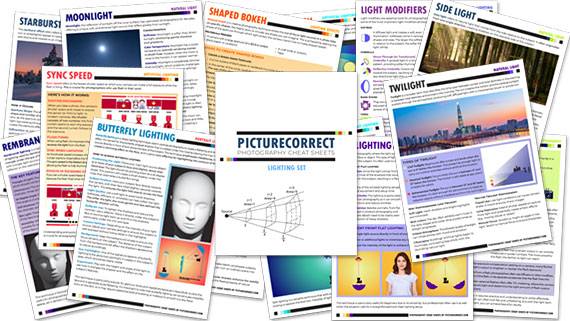
New! Cheat Sheets for Photography Lighting (see how they work)
Whether you’re a seasoned professional or just starting out, photography cheat sheets can be a valuable resource for improving your skills and taking your photography to the next level. By having all the key information you need in one place, you can focus on what’s important – capturing amazing photos.
Pre-Black Friday sale ending soon: Photo Lighting Cheat Sheets at 80% Off
The post Low Light Photography Tips first appeared on PictureCorrect.
from PictureCorrect https://ift.tt/YmQMFS9
via IFTTT


Great insights — thanks for sharing these low-light photography tips! Really agree with your points about stabilizing the camera and carefully balancing ISO and shutter speed — those are absolutely key.
VastaaPoistaAt PHE Photos (https://phephotos.com/), we also lean heavily on smart post-processing to clean up noise and enhance detail when shooting in dim light. Looking forward to more of your photography wisdom here!