


If your photos feel flat, it’s usually not your camera—it’s depth. And spring is one of the easiest times of year to fix that.
The reason is simple. Spring scenes naturally come with layers. Flowers bloom close to the ground, trees fill the middle of the frame, and skies or distant landscapes stretch into the background. Instead of having to search for depth, it’s already built into the environment. The key is learning how to use it intentionally.
Most flat-looking photos share the same issue. There’s a subject, and then there’s a background, but nothing connects the two. The image feels more like a snapshot than a scene you can step into. Stronger photographs guide your eye through the frame, and that’s where depth comes in.
Quick reminder: only a little while left for the Photography eBook Spring Sale
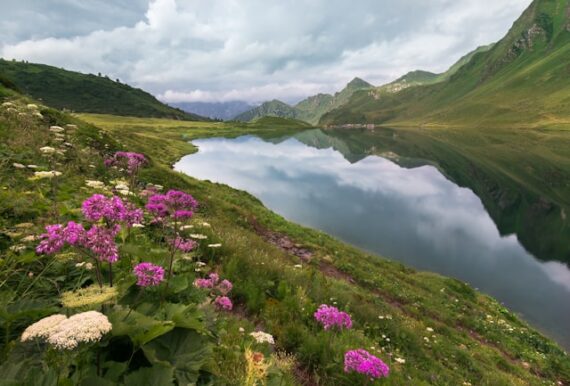
Photo captured by Jan Huber
The Simple Formula for Depth
At its core, depth is just three layers working together:
Foreground → Midground → Background
The foreground draws you in, the midground gives you a subject, and the background completes the scene. When these layers are clearly defined and connected, the image feels more immersive and three-dimensional.
Start With the Foreground
The easiest place to improve your photos is the foreground, and it’s also the layer most photographers ignore.
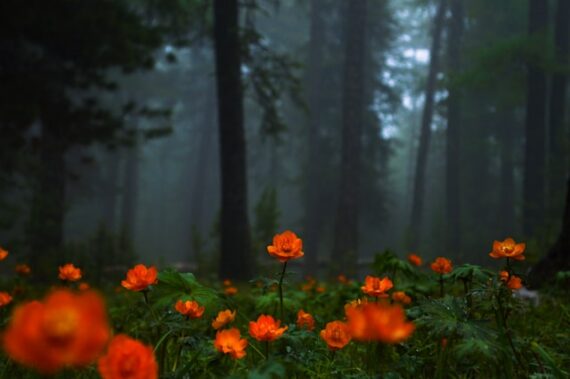
Photo captured by Dembee Tsogoo
Instead of standing back and zooming in, try moving closer—much closer. Look for flowers near your feet, small plants, or low branches, and position them intentionally in the frame.
A strong foreground acts as a visual entry point. It gives the viewer somewhere to begin before moving deeper into the image.
Build the Midground
The midground is where your main subject usually lives. This might be a tree in bloom, a path through flowers, or a subject within the scene.
The goal here is connection. Elements like paths, rows of flowers, or natural lines help guide the viewer from the foreground into the midground.
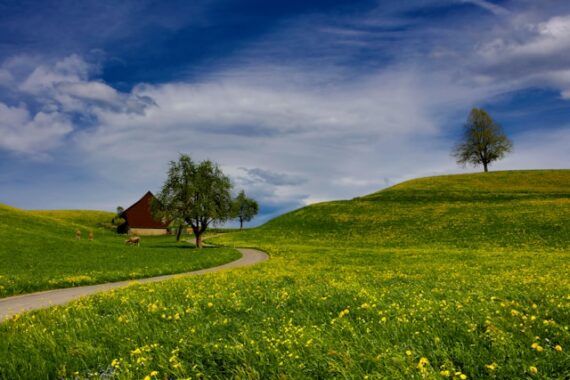
Photo captured by Ricardo Gomez Angel
When this works well, the image feels like it flows instead of stopping abruptly.
Keep the Background Clean
The background gives your image context and depth, but it should stay supportive rather than distracting.
A clean background helps your subject stand out, while a busy one competes for attention and flattens the image.
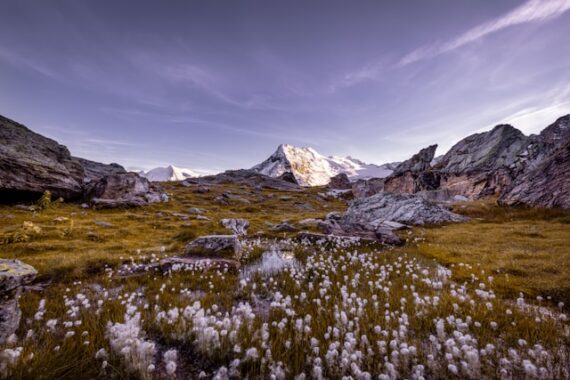
Photo captured by Falko Burghausen
If the background is distracting, it’s hurting your depth.
Use Flowers as Natural Depth Anchors
Spring gives you something incredibly useful: natural foreground elements everywhere.
Instead of always treating flowers as your subject, start using them as depth anchors. Place them close to your lens, shoot through them, or use them to frame your scene.
This creates separation between layers, which is what gives your photo that three-dimensional feel.
A field of flowers isn’t just something to photograph—it’s something to shoot through.
Choose the Right Lens for Depth
Lens choice has a huge impact on how depth feels in your image.
A wide-angle lens is usually the best choice because it exaggerates distance between foreground and background. When you place flowers close to the lens, they appear larger and more immersive, while the background stretches away.
A telephoto lens does the opposite. It compresses layers and brings everything closer together, which can be useful for certain compositions but reduces the sense of depth.
A macro lens or fast prime is great for isolating details with a blurred background, but it’s less effective when your goal is to build layered depth.
Camera Settings That Help
You don’t need complicated settings, but a few adjustments make a big difference.
An aperture around f/8 to f/11 works well for most scenes because it keeps multiple layers sharp without introducing softness from diffraction.
Focus placement is just as important. Instead of focusing on the closest object, try focusing slightly into the scene, often around the midground, to balance sharpness across your image.
Spring conditions also introduce movement, especially with flowers. A shutter speed of at least 1/125s or faster helps keep your foreground sharp, and you can increase it if the wind picks up. ISO can then be adjusted as needed to support those settings.
A Simple Way to Practice
The next time you’re out shooting, approach the scene deliberately.
Start by finding a strong foreground, then position yourself so it leads into a clear midground subject, and finally make sure the background supports the composition.

Photo captured by Sergio Li
Small movements make a big difference. Taking a step to the side, lowering your camera, or moving closer can completely change how the layers interact.
The Real Difference
Most photographers try to capture what they see.
But strong images are built, not just captured.
Spring makes this easier than any other season because the elements are already there—layers, color, and natural foregrounds waiting to be used.
Once you start thinking in terms of foreground, midground, and background, your photos stop feeling flat…
…and start pulling the viewer into the scene.
For Further Training:
This #1 bestseller is the most in-depth eBook on how to capture amazing photography anywhere. Over 250 pages of photography tips & tricks from industry insiders. Currently 83% off today for a Spring Sale if you want to check it out.
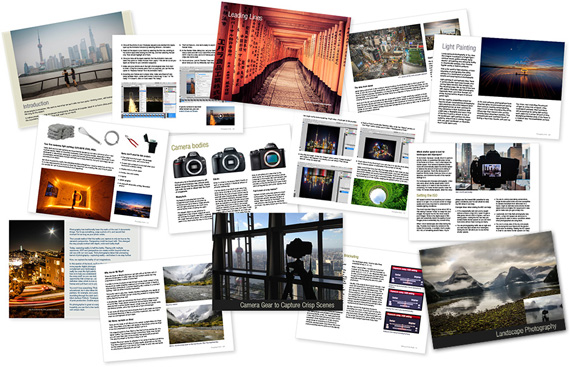
Pages from The Photography Tutorial eBook
It is the product of over a DECADE of research as an insider in the photography industry, assembled to help you learn quickly and avoid the mistakes that I made along the way.
Deal ending soon: The Photography Tutorial eBook Spring Sale
from PictureCorrect https://ift.tt/tvLGl3K
via IFTTT


0 kommenttia:
Lähetä kommentti