


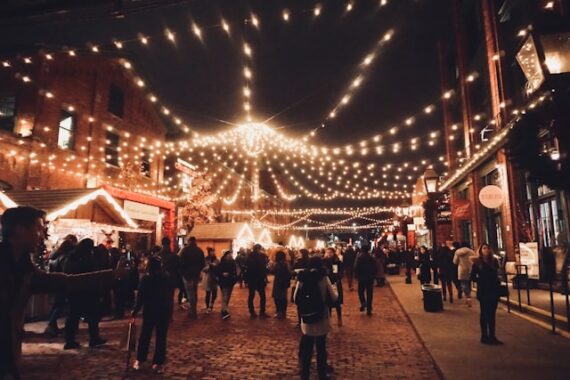
Night markets and city streets after dark are some of the most visually rich places you can photograph—glowing signs, layered light sources, motion, atmosphere, and human interaction all happening at once. But they’re also where many photographers struggle the most. Light levels change quickly, colors mix unpredictably, and movement is constant.
The key to success isn’t exotic gear or perfect conditions—it’s understanding how to choose camera settings that balance sharpness, mood, and responsiveness in low light.
This guide walks through practical, real-world camera settings for photographing night markets and city streets, with an emphasis on handheld shooting, adaptability, and intentional creative control.
Related note: only a little while left for the Travel Photography Cheat Sheets at 88% Off!
Start With the Right Exposure Mode
In fast-moving night environments, Aperture Priority or Manual with Auto ISO are usually the most reliable choices.
- Aperture Priority (Av / A): Ideal when light levels fluctuate constantly. You control depth of field, and the camera adjusts shutter speed.
- Manual + Auto ISO: Gives full control over aperture and shutter speed while letting ISO float to maintain exposure.
For most photographers, Manual + Auto ISO offers the best balance of control and speed once you’re comfortable with it.
Aperture: Let the Light In (But With Intent)
Night markets are dim, crowded, and visually complex. A wider aperture helps you gather light and isolate subjects.
Recommended aperture range:
- f/1.8–f/2.8 for subject isolation and low light
- f/3.5–f/4 if you want more environmental context
Wider apertures:
- Allow lower ISO or faster shutter speeds
- Create separation in busy scenes
- Emphasize faces, hands, or products against chaotic backgrounds
Stopping down slightly (around f/2.8–f/3.2) often improves sharpness while still keeping backgrounds soft.
Shutter Speed: Freeze Life—or Let It Move
Movement is everywhere: people walking, vendors working, steam rising, lights flickering. Your shutter speed determines whether your image feels energetic or chaotic.
General guidelines (handheld):
- 1/125s–1/250s: Freezes people, gestures, and quick moments
- 1/60s–1/100s: Good balance for walking subjects
- 1/30s–1/50s: Introduces motion blur for atmosphere
- Below 1/30s: Best used intentionally or with stabilization
If your images feel soft, it’s often motion blur—not missed focus. Err on the side of a slightly faster shutter speed and let ISO rise if needed.
ISO: Embrace It (Within Reason)
Modern cameras handle high ISO far better than most photographers expect. In night street photography, noise is often preferable to blur.
Practical ISO approach:
- Set Auto ISO with a max of 3200–6400 (or higher if your camera allows)
- Don’t be afraid of grain—it often enhances night atmosphere
- Avoid heavy noise reduction that smears detail and skin texture
A sharp, slightly noisy photo will almost always feel stronger than a smooth but blurry one.
Focus: Keep It Simple and Predictable
Low light and busy scenes can confuse autofocus systems.
Recommended focus setups:
- Single-point AF for precise subject placement
- Zone AF for quick reactions in crowds
- Continuous AF (AF-C / AI Servo) for moving subjects
If your camera struggles to lock focus:
- Aim at contrasty edges (faces, hands, signage)
- Avoid focusing on flat, dark surfaces
- Use back-button focus if you’re comfortable with it
Manual focus can work, but autofocus is usually faster and more flexible in dynamic street environments.
White Balance: Control the Color Chaos
Night markets combine LED signs, tungsten bulbs, fluorescents, and neon—often all in one frame.
Best strategies:
- Auto White Balance: Flexible and fine if you shoot RAW
- Kelvin mode (3000–4200K): Offers consistency across a series
- Embrace color shifts rather than neutralizing everything
Trying to make all light sources “accurate” often removes the atmosphere. Let warm stay warm. Let neon glow.
Metering: Protect the Highlights
Bright signs and bulbs can easily blow out.
- Use Evaluative / Matrix metering as a starting point
- Slightly underexpose (–0.3 to –1 EV) to preserve highlights
- Watch histogram and highlight warnings, not just the LCD preview
You can lift shadows later—blown highlights are gone forever.
Image Stabilization: Helpful, Not Magic
Stabilization allows slower shutter speeds, but it doesn’t freeze subject movement.
Use it to:
- Shoot at 1/30s–1/50s handheld
- Reduce camera shake
- Keep static elements sharp
But remember: people still move. Stabilization won’t fix that.
A Simple Starting Setup
If you want a fast, reliable baseline:
- Mode: Manual + Auto ISO
- Aperture: f/2.0–f/2.8
- Shutter speed: 1/125s
- Auto ISO max: 6400
- Focus: Single-point AF or Zone AF
- White balance: Auto or 3800K
- Metering: Evaluative
Adjust from there based on motion and light.
Final Thought
Night markets and city streets reward photographers who react quickly and accept imperfection. Grain, blur, color shifts, and contrast all become part of the story when handled intentionally.
Mastering camera settings in these environments isn’t about technical perfection—it’s about staying present, anticipating moments, and letting the scene breathe through your choices.
If you can control exposure, motion, and focus under these conditions, everything else starts to feel easier.
For Further Training:
Some shots are just harder than others. Ever struggled with Milky Way photos, twilight exposures, or star trails and focus stacking while you’re on the move? The Travel Photography Cheat Sheets (currently 88% off today) are built exactly for moments like that:

Showing you step by step how to dial in settings, avoid common mistakes, and get the shot — even when you’re tired, rushed, or shooting in unfamiliar conditions. Travel-ready, no Wi-Fi required, and designed to be quick to reference so you can spend less time guessing and more time shooting.
Deal ending soon: Travel Photography Cheat Sheets at 88% Off
from PictureCorrect https://ift.tt/01QkUYS
via IFTTT


This is a very practical guide — the camera settings you choose can make a big difference, especially in challenging lighting conditions. For real estate photography, getting the exposure, ISO, and depth right is key to showcasing a property’s best features.
VastaaPoistaOn PhePhotos, which focuses on real estate photo editing, we often emphasize how good in-camera setup helps reduce editing time later. Thanks for the detailed rundown! https://phephotos.com/