


If your photos often look flat, dull, or just not as striking as you remember the scene, there’s a good chance the problem isn’t your camera, your lens, or even your settings. It’s lighting. More specifically, it’s where the light is coming from.
The single biggest lighting mistake photographers make—at every experience level—is shooting with flat, front-facing light without realizing it. This one habit quietly drains depth, texture, and mood from photos, and it’s often the reason images feel “meh” even when everything seems technically correct.
Related reminder: only a little while left for the Lighting Cheat Sheets February Flash Sale

Why Flat Light Is So Tempting
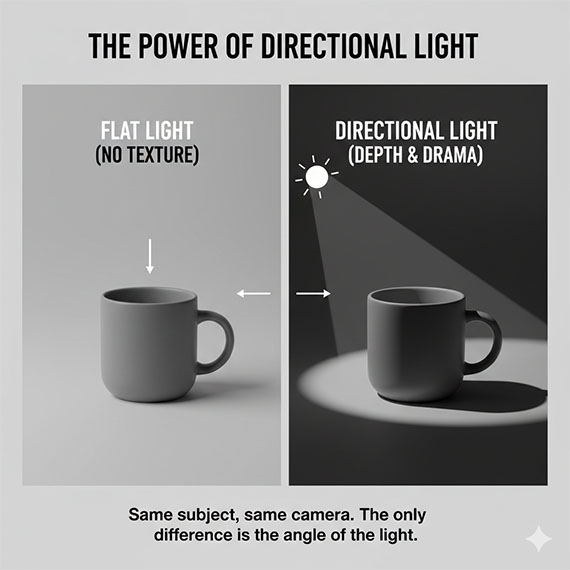
Flat light happens when your main light source—whether it’s the sun, a window, or a flash—is directly behind you and shining straight onto your subject. On the surface, this feels safe. The subject is evenly lit, shadows are minimal, and nothing looks obviously “wrong.”
Cameras also love flat light. Metering systems handle it easily, autofocus locks quickly, and exposure tends to look clean right out of the camera. That’s why this mistake is so common: it produces technically acceptable photos that lack emotional impact.
The problem is that photography isn’t just about visibility—it’s about dimension.
What Flat Light Does to Your Photos
When light hits a subject straight-on, it removes shadows. And when shadows disappear, so does depth. Texture flattens out. Shapes lose definition. Faces look wider. Landscapes feel lifeless. Objects blend into their surroundings instead of standing apart.
Our eyes rely on subtle transitions between light and shadow to understand shape. When those transitions are missing, the image feels two-dimensional, even if it’s perfectly sharp and well-exposed.
This is why photos taken at noon often feel boring, why on-camera flash can look harsh and amateurish, and why cloudy days can produce images that feel washed out unless handled carefully.
Direction Matters More Than Brightness
One of the biggest misconceptions about lighting is that more light equals better photos. In reality, direction beats intensity every time.
A soft, angled light source creates gentle shadows that wrap around your subject. It reveals texture in skin, brings out details in architecture, and adds separation between foreground and background. Even dim light can be beautiful if it comes from the right angle.
Think about early morning or late afternoon sun. The light is warmer, lower, and directional. Suddenly, ordinary scenes look cinematic—not because the sun is brighter, but because it’s sculpting the scene instead of flattening it.
How to Spot the Mistake in Real Time
A quick way to diagnose flat lighting is to look at the shadows. If you can’t clearly see where the shadows are falling—or if there are almost none—you’re probably dealing with flat light.
Another giveaway is when your subject blends into the background instead of popping off it. This often happens in portraits where the face and background are lit equally, or in landscapes where everything looks evenly bright but visually dull.
If you find yourself thinking, “This looks fine, but it doesn’t feel like much,” lighting direction is almost always the culprit.
The Simple Fix Most Photographers Miss
You don’t need new gear to fix this mistake. You just need to move.
Instead of shooting with the light behind you, try stepping to the side so the light hits your subject at a 30–90 degree angle. Instantly, shadows appear. Texture comes alive. The scene gains depth.
Indoors, this might mean turning your subject sideways to a window instead of facing it head-on. Outdoors, it could be as simple as walking a few steps left or right relative to the sun. With flash, bouncing light off a wall or ceiling instead of firing it directly forward makes a massive difference.
The key idea is to let light shape your subject, not just illuminate it.
When Flat Light Actually Works
Flat light isn’t always bad—it’s just overused. Certain situations benefit from it, like product photography where consistency matters, or documentary shots where clarity is more important than mood.
The mistake isn’t using flat light. The mistake is using it by default, without intention.
Once you understand what flat light does and how to control it, you can choose it deliberately instead of accidentally.
A Quick Exercise to Train Your Eye
Find a simple subject—anything from a coffee mug to a person near a window.
First, photograph it with the light directly behind you, hitting the subject straight-on. Then, without changing your camera settings, move so the light comes from the side. Finally, try positioning the light slightly behind the subject for a more dramatic look.
Compare the images. Notice how little effort it took to transform the scene—and how much more depth and mood the directional light creates.
Final Thoughts
Most photographers chase better cameras, sharper lenses, or more advanced settings, while the biggest improvement is often free and immediate. Light direction is one of the most powerful tools in photography, and ignoring it is the fastest way to kill an otherwise good photo.
The moment you stop asking, “Is my subject bright enough?” and start asking, “Where is the light coming from?” your images begin to change—dramatically.
And that shift alone can elevate your photography more than any upgrade ever will.
For Further Training:
Lighting is arguably the most important aspect of photography; but do you know how to use it? These Photography Lighting Cheat Sheets are designed to help. With critical information on ALL the types of natural light and artificial light you can use. They are currently 80% off today for a February Flash Sale 
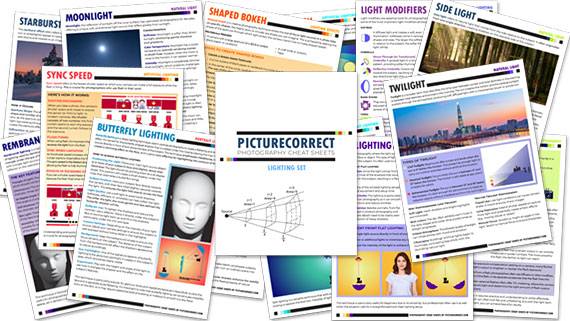
New! Cheat Sheets for Photography Lighting (see how they work)
Whether you’re a seasoned professional or just starting out, photography cheat sheets can be a valuable resource for improving your skills and taking your photography to the next level. By having all the key information you need in one place, you can focus on what’s important – capturing amazing photos.
Deal ending soon: Photo Lighting Cheat Sheets at 80% Off
from PictureCorrect https://ift.tt/aUWNFXn
via IFTTT


Great breakdown of how improper lighting control can flatten depth and wash out detail. Many photographers underestimate how dynamic range and light direction directly affect perceived image quality.
VastaaPoistaIn real estate photography, especially, balanced exposure and natural-looking light are critical for buyer engagement and conversion. Post-production can enhance a photo, but it can’t fully fix fundamentally poor lighting decisions on-site.
At BeatColor, we work closely with photographers to refine exposure blending, window pulls, and color consistency while preserving realistic lighting. If anyone wants to explore professional real estate photo editing support, feel free to visit: https://beatcolor.com/