


Topaz Labs recently released its Realism Update for their photo editors, alongside a holiday sale currently running on their photo tools. While promotions come and go, this update itself is notable because it tackles one of the biggest concerns photographers have had with AI enhancement: images that look overly smooth, artificial, or “plastic.”
Rather than pushing stronger sharpening or more aggressive detail generation, the Realism Update is clearly aimed at producing results that feel more natural and photographically realistic—especially important for portraits, wildlife, and detailed still images.
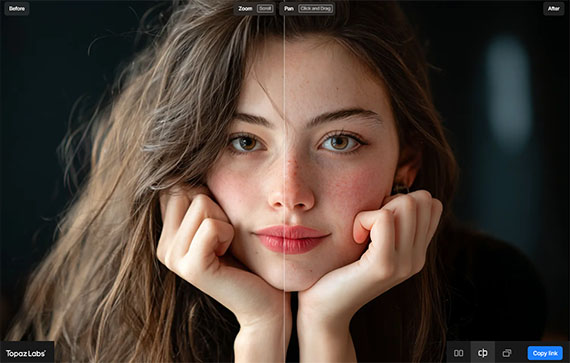
Moving Beyond the “Plastic” AI Look
AI-powered photo tools have improved rapidly, but realism hasn’t always kept pace. Skin textures can turn waxy, fur and feathers can lose subtle detail, and sharpening can quickly cross the line from crisp to artificial.
This update shifts the focus toward preserving original textures and reconstructing detail in a way that respects how real photographs should look. For photographers who value subtlety over spectacle, that’s a meaningful change.
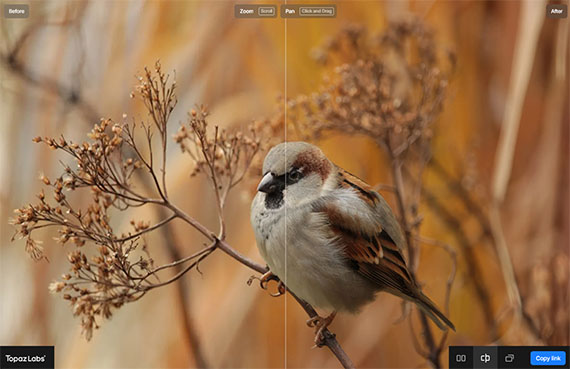
New Sharpen Models for Wildlife and Portraits
One of the most practical updates for photographers is the new generation of Sharpen models designed specifically to avoid overprocessing.
These models are better at preserving:
- Fur, feathers, whiskers, and scales in wildlife images
- Natural facial detail in portraits
- Clean edges without halos or crunchy textures
Instead of treating every subject the same, the models aim to adapt sharpening behavior to the content of the photo, keeping images sharp without introducing that brittle, AI-enhanced appearance.
Bloom Realism: Rebuilding Fine Detail Naturally
The new Bloom Realism model focuses on reconstructing fine details that often suffer during enhancement, particularly in portraits.
It’s designed to improve:
- Skin texture without heavy smoothing
- Hair detail without clumping or sharpening artifacts
- Eyes and facial features without an overprocessed look
Rather than simply sharpening what’s already there, Bloom Realism attempts to rebuild detail in a more photographically believable way—useful for both real-world photos and AI-generated imagery that needs a more natural finish.
Improved Upscaling for Low-Resolution Photos
The updated Standard MAX upscaling model is aimed at photographers working with smaller or older image files. It performs especially well when enlarging low-resolution images while maintaining natural textures.
Key benefits include:
- More realistic detail generation
- Cleaner results without harsh artifacts
- Better texture handling compared to older upscaling approaches
This makes it a practical option for restoring older photos, preparing images for larger prints, or working with heavily cropped files.
Why This Update Matters for Photographers
What stands out most about the Realism Update is its restraint. Instead of chasing maximum sharpness or exaggerated detail, Topaz Labs appears to be refining how AI enhancement integrates into a traditional photographic workflow.
For photographers who’ve been hesitant to rely on AI tools because of unrealistic results, this update represents a more thoughtful balance between enhancement and authenticity.
With the holiday sale currently underway, it’s also a timely moment for photographers who’ve been on the fence to explore these updates—whether that’s refining portraits, improving wildlife images, or restoring lower-resolution photos—without committing to an overly aggressive editing style.
Deal ending soon: Topaz Image Quality Editors Holiday Sale
from PictureCorrect https://ift.tt/Ms7y9on
via IFTTT


Thank you for the great tips on achieving sharper focus — I especially appreciate the practical advice about stabilizing your shots and choosing the right focus mode. For anyone else interested in improving sharpness in their photos, I also found another helpful guide here: Phephotos https://phephotos.com/
VastaaPoista