torstai 31. heinäkuuta 2025

PictureCorrect.com: Understanding Computational Photography in Smartphones

Smartphone photography has come a long way since the early days of grainy, low-resolution images. Today’s smartphones are equipped with advanced cameras that rival even some professional equipment. The secret behind this remarkable transformation lies not just in hardware improvements but also in the rise of computational photography.

Related note: super sale going on now for the iPhone Photo Academy
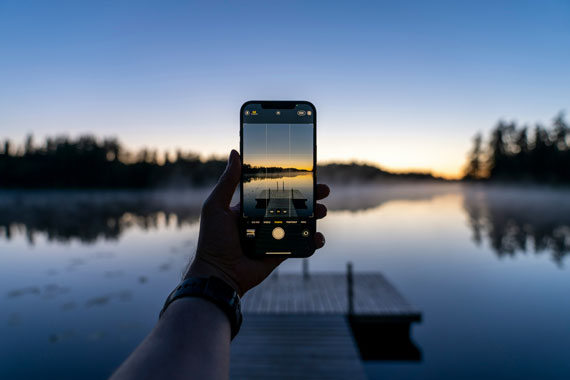
computational photography

Photo captured by Hendrik Morkel

What is Computational Photography?

Computational photography refers to the use of software algorithms to enhance or create images. Unlike traditional photography, which relies primarily on optical and mechanical processes, computational photography leverages the power of digital computation to process images in ways that were previously impossible. This approach allows for features like HDR (High Dynamic Range), portrait mode, and night mode, which enhance image quality and expand creative possibilities.

Key Features of Computational Photography in Smartphones

HDR Imaging:

High Dynamic Range (HDR) imaging is one of the most common applications of computational photography. By capturing multiple exposures of the same scene and merging them into a single image, HDR enhances the details in both bright and dark areas. This results in a more balanced and visually pleasing photograph.

Portrait Mode and Bokeh Effects:

Smartphones use computational photography to simulate the bokeh effect, which traditionally requires a DSLR with a fast lens. By using depth data from multiple cameras or sensors, smartphones can create a background blur effect, making the subject stand out. This feature, often marketed as “Portrait Mode,” is a favorite for portrait photographers.

Night Mode:

Low-light photography has always been challenging, but computational techniques have made it more accessible. Night mode captures a series of images at different exposures and then merges them to reduce noise and improve detail. This results in brighter and clearer images, even in dimly lit environments.

Super-Resolution and Image Sharpening:

Computational photography can also enhance the resolution and sharpness of images. Techniques like super-resolution combine data from multiple images to create a higher-resolution photo. Image sharpening algorithms, meanwhile, can enhance edge details, making the images appear crisper.

AI and Machine Learning:

Artificial intelligence (AI) and machine learning are integral to modern computational photography. Smartphones can now recognize scenes, objects, and faces, adjusting settings in real-time to optimize the shot. For instance, AI can enhance skin tones in portraits or boost colors in landscape photos.

The Impact on Photography

Computational photography has democratized high-quality imaging, making it accessible to everyone with a smartphone. It has also expanded the creative potential for photographers, offering tools and effects that were once exclusive to advanced photo editing software.

However, it also raises questions about the authenticity of images. As software increasingly takes over the image-making process, the line between a captured moment and a digitally enhanced creation becomes blurred. This evolution challenges photographers and viewers to reconsider what constitutes a “photograph” in the digital age.

The Future of Computational Photography

The future of computational photography looks promising, with advancements in AI and machine learning leading the charge. Future smartphones may offer even more sophisticated image processing capabilities, such as real-time 3D scene reconstruction or augmented reality (AR) enhancements. As technology continues to evolve, the possibilities for creative expression in photography are bound to expand even further.

Conclusion

Computational photography has revolutionized the way we capture and perceive images, making high-quality photography accessible to everyone. As smartphones continue to evolve, the boundary between hardware and software in photography will blur even further, pushing the limits of what’s possible. Whether you’re a professional photographer or a casual snapshooter, understanding these technologies can help you make the most of your smartphone camera and take your photography to the next level.

By embracing computational photography, we open up new creative avenues and redefine the art of capturing moments. As we look to the future, it’s clear that this technology will continue to shape the landscape of photography, offering exciting possibilities for both photographers and enthusiasts alike.

For Further Training:

iPhone Photo Academy is an in-depth online course that will show you how to take incredible iPhone photos. With the right knowledge an iPhone can be used to take photos that are so good that most people would never even believe that they were taken with a phone. It is currently 90% off for their Super Sale which ends soon!
iphone photo tutorials

iPhone Photography Tricks (Click to See More Examples)

The best camera is the one that is always with you. But having the iPhone with you is only half of the equation. The other half is knowing how to use it to take outstanding photos.

Deal ending soon: The iPhone Photography Academy at 90% Off


from PictureCorrect https://ift.tt/2ByFcCd
via IFTTT
tiistai 29. heinäkuuta 2025

PictureCorrect.com: Knowing the Sunset Phases as a Photographer

Sunsets are nature’s canvas, painting the sky with a myriad of colors and offering photographers a golden opportunity to capture breathtaking moments. Understanding the different phases of a sunset can significantly enhance the quality of your photographs, allowing you to anticipate changes in light and color. Let’s delve into these phases and explore the unique characteristics of each.

Quick reminder: for a cheat sheet on this topic that you can print out to remember (and many more), there is only 1 day left for the Photography Lighting Cheat Sheets Sunlight Sale

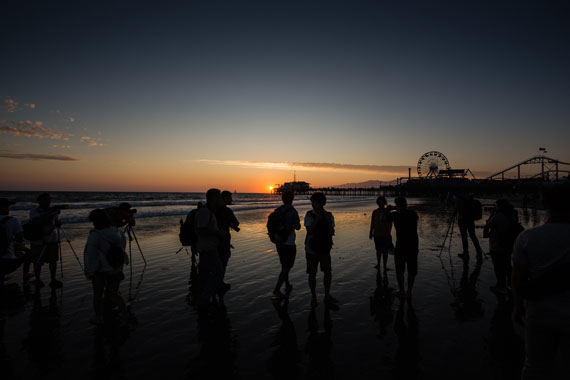
sunset phases

1. Golden Hour

The golden hour is a magical time for photographers. Occurring roughly an hour before sunset (and similarly after sunrise), this phase is characterized by a warm, golden glow. The sun’s rays, traveling through a thicker portion of the Earth’s atmosphere, scatter, producing this enchanting light. The resulting soft and diffused illumination is perfect for various photography genres:

  • Portraits: The flattering light minimizes skin imperfections and casts gentle shadows.
  • Landscapes: The elongated shadows add depth and dimension to the terrain.
  • Cityscapes: Buildings glow with a soft luminescence, adding character to urban scenes.

2. Civil Twilight

As the sun dips below the horizon, we enter the phase of civil twilight. Lasting until the sun is 6 degrees below the horizon, the sky undergoes a transformation. The warm hues of the golden hour give way to cooler blues and purples. With reduced contrast and minimal shadows:

  • The atmosphere becomes serene, perfect for capturing tranquil landscapes and reflective waters.
  • City lights begin to twinkle, offering a balanced interplay between natural and artificial light.

3. Blue Hour

Contrary to its name, the blue hour is brief, occurring when the sun is between 4 and 6 degrees below the horizon. The sky adopts a deep blue hue:

  • City lights shine brightly, creating a stark contrast against the darkening sky.
  • Landscapes take on a moody ambiance, perfect for evocative imagery.

4. Nautical Twilight

Named for its use by sailors for navigation when the horizon is still discernible, nautical twilight occurs when the sun is between 6 and 12 degrees below the horizon. The sky deepens in color:

  • Blues and purples become more pronounced, adding drama to the scene.
  • The first stars might make an appearance, hinting at the celestial show to come.
  • Silhouettes become prominent, offering creative opportunities for compositions against the vibrant backdrop.

5. Astronomical Twilight

As the sun retreats further, between 12 to 18 degrees below the horizon, we enter astronomical twilight. The sky turns very dark:

  • Most stars become visible, paving the way for astrophotography.
  • The Milky Way might make its grand appearance, allowing for mesmerizing captures.
  • Landscapes under starry skies can create ethereal compositions.

To truly harness the beauty of a sunset, preparation is key. Plan your shots, scout your locations, and be ready with your equipment. Remember, the exact timing and characteristics of each phase can vary based on your location, the season, and prevailing weather conditions. With knowledge and anticipation, you can immortalize the fleeting moments of nature’s grand spectacle.

For Further Training:

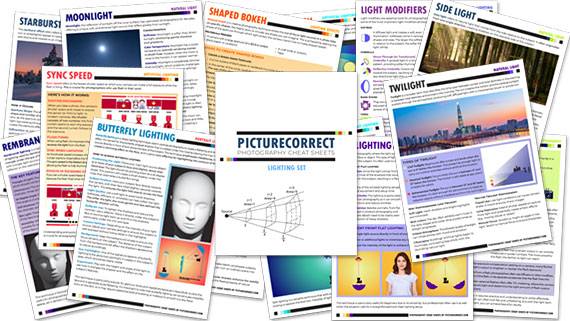
Lighting is arguably the most important aspect of photography; but do you know how to use it? These new Photography Lighting Cheat Sheets are designed to help. With critical information on ALL the types of natural light and artificial light you can use. In the spirit of summer, they are currently 80% off until the end of the month for a summer sale.

lighting cheat sheets

New! Cheat Sheets for Photography Lighting (see how they work)

Whether you’re a seasoned professional or just starting out, photography cheat sheets can be a valuable resource for improving your skills and taking your photography to the next level. By having all the key information you need in one place, you can focus on what’s important – capturing amazing photos.

Only 1 day left: The Photography Lighting Cheat Sheets at 80% Off


from PictureCorrect https://ift.tt/vn59JNw
via IFTTT

maanantai 28. heinäkuuta 2025

PictureCorrect.com: Understanding Flash Unit Settings

When used effectively, a flash can be a powerful tool in photography, helping to illuminate your subjects and add depth to your shots. However, understanding flash settings—such as delay, intensity, and others—can be tricky. This guide will help you get the most out of your flash by exploring these critical settings.

Quick reminder: for a cheat sheet on this topic that you can print out to remember (and many more), venture over to the Photography Lighting Cheat Sheets Sunlight Sale

flash unit

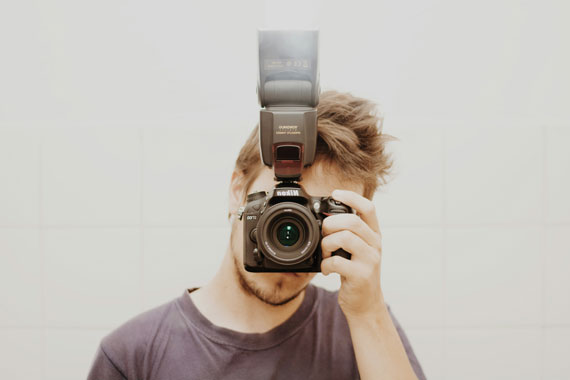
Photo captured by Luciano Zanollo

1. Flash Intensity: Controlling the Light

Flash intensity refers to how bright the flash will be. Adjusting this can help create different lighting effects, avoid overexposure, and give your image the desired mood.

  • Low Intensity: Use this setting for subtle fill light or when you’re shooting in well-lit environments. A lower intensity balances natural and artificial light without overpowering your subject.
  • High Intensity: This is ideal for low-light conditions or when you want a dramatic effect, but be cautious of overexposure. You might need to compensate by adjusting the camera’s aperture or ISO.

2. Flash Delay: Timing is Everything

Flash delay determines when the flash fires in relation to when you press the shutter. There are typically two main delay options:

  • Front Curtain Sync (No Delay): The flash fires at the beginning of the exposure, which is useful for freezing motion. This works well in action shots or scenes where you want to stop movement right as it happens.
  • Rear Curtain Sync (Delayed): The flash fires at the end of the exposure, allowing ambient light to be captured first. This setting is great for motion blur effects, such as trailing car lights or when you want to show movement before freezing the subject.

3. Manual vs. TTL Flash

  • Manual Mode: In manual flash mode, you control the power output. This setting gives you full creative control but requires more experience to adjust the light correctly.
  • TTL (Through The Lens) Mode: TTL mode automatically adjusts the flash power based on the camera’s reading of the scene. This is a more automated option, ideal for beginners or when shooting in dynamic lighting environments.

4. Flash Zoom

Some flashes allow you to control the zoom, which focuses the light spread. A narrower beam is useful for highlighting a specific subject, while a wider beam lights up a broader area.

  • Wide Zoom: Best for group shots or when you want to light up a large area.
  • Narrow Zoom: Ideal for portraits or spotlighting a single subject.

5. Bouncing Flash for Soft Light

Instead of pointing the flash directly at your subject, you can bounce it off a ceiling or wall for a softer, more natural look. Most flashes have a tilting head for this purpose. Experiment with the angle to achieve the right balance of light and shadows.

6. Slow Sync Flash

Slow sync flash allows for longer exposures with flash, combining natural and artificial light. This setting is particularly useful in low-light environments where you want to capture background details without losing focus on your subject.

  • Use it in Night Photography: Capture the atmosphere of a dimly lit environment while still keeping your subject well-lit.

Summary:

Flash photography can seem daunting, but once you understand how to control settings like intensity, delay, and zoom, you’ll have much more creative control over your lighting. Whether you’re freezing action or creating soft, natural light, mastering these settings will elevate your photos to the next level.

For Further Training:

Lighting is arguably the most important aspect of photography; but do you know how to use it? These new Photography Lighting Cheat Sheets are designed to help. With critical information on ALL the types of natural light and artificial light you can use. In the spirit of summer, they are currently 80% off today for a Sunlight sale.

lighting cheat sheets

New! Cheat Sheets for Photography Lighting (see how they work)

Whether you’re a seasoned professional or just starting out, photography cheat sheets can be a valuable resource for improving your skills and taking your photography to the next level. By having all the key information you need in one place, you can focus on what’s important – capturing amazing photos.

Sunlight sale ending soon: The Photography Lighting Cheat Sheets at 80% Off


from PictureCorrect https://ift.tt/vymcH7h
via IFTTT

sunnuntai 27. heinäkuuta 2025

PictureCorrect.com: Harnessing Soft Light: Where & When to Find Diffused Lighting

As a photographer, understanding light is as fundamental as understanding your camera. One of the most flattering and universally appealing types of lighting is diffused light. This kind of light is soft, gentle, and does not cast harsh shadows, making it ideal for a variety of photography genres. But where and when can you find the best diffused lighting? Let’s dive into some key tips to help you harness the power of diffused light for your photography.

Related reminder: only a little while left for the Lighting Cheat Sheets ☀ Summer Sale
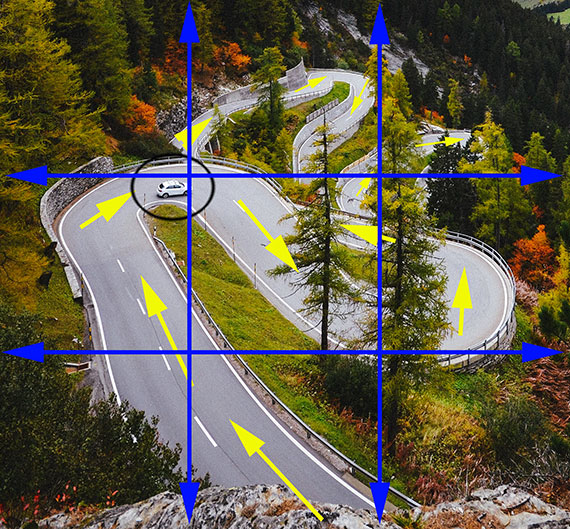
diffused light photo

1. Golden Hour – Dawn and Dusk

Golden hour is that magical time just after sunrise or just before sunset. The sun is low in the sky, and its light is filtered through a greater amount of the Earth’s atmosphere, which scatters the direct sunlight and reduces its intensity. This natural diffusion creates a warm, soft light that is not only less intense but also casts long, gentle shadows. It’s perfect for portrait photography, landscape shots, and even urban scenes where the golden tones can bring a new dimension to your compositions.

2. Overcast Days – Natural Soft Boxes

Cloudy days might seem dull to the untrained eye, but they are actually perfect for diffused lighting. The clouds act like a giant softbox in the sky, scattering and softening the sunlight. This eliminates harsh shadows and provides a clean, even light that is excellent for shooting portraits, macro photography, or any scene where you want subtle details and colors to emerge without the interference of strong shadows.

3. Shaded Areas – Soft Shadows

When the sun is too intense, look for shaded areas under trees, buildings, or other large objects. These spots can provide a sanctuary of diffused light. The key here is to find areas where the sunlight is not directly hitting the subject but is instead filtered through or bounced off other surfaces. This setup is particularly useful for achieving beautifully lit portraits without squinting subjects or harsh facial shadows.

4. Using Windows – Indoor Diffusion

Indoors, windows can serve as excellent sources of diffused light, especially when covered with sheer curtains. The fabric acts to scatter the light, mimicking the effect of a softbox used in studio photography. This method is ideal for product photography, food photography, and portraits. The directional light from a window can also create a dynamic range of light and shadow, adding depth to your indoor shots.

5. The Blue Hour – Twilight Ambience

Following the golden hour, the blue hour provides a brief period where the sky takes on a predominantly blue tone with a cool, soft light. This light is diffused through the absence of the direct sun and offers a unique quality that is excellent for cityscapes, landscapes, and even nighttime portraiture. The softness helps to smooth out imperfections and brings a tranquil and ethereal mood to photographs.

6. Tools to Enhance Diffusion

While natural light provides many opportunities for diffused lighting, sometimes manipulation is necessary to achieve the perfect shot. Tools like diffusers, reflectors, and softboxes can help recreate or enhance the qualities of diffused light. These are particularly useful in harsh lighting conditions or when shooting in direct sunlight.

Summary:

Finding the perfect light can sometimes be a challenge, but with an understanding of where and when to find diffused light, you can significantly improve the quality and aesthetic of your photographs. Whether utilizing the golden tones of the early morning, the soft evenness of an overcast day, or the subtle hues of twilight, mastering diffused lighting can transform your photography. Always be prepared to observe and adapt to your environment to make the most of the light available to you, and don’t hesitate to use tools to create or enhance light diffusion where necessary.

For Further Training on Portrait Lighting:

Mastering portrait lighting techniques is an art form that presents its own set of intricate challenges. Each style demands a precise understanding of light placement, shadow control, and subject orientation to achieve its signature effect. These new Lighting Cheat Sheets (☀ Summer Sale Ending Soon) are designed to help.
portrait lighting sheets

Portrait Lighting Cheat Sheets

Whether you’re a seasoned professional or just starting out, photography cheat sheets can be a valuable resource for improving your skills and taking your photography to the next level. By having all the key information you need in one place, you can focus on what’s important – capturing amazing photos.

Summer sale ending soon: Portrait Lighting Cheat Sheets at 80% Off


from PictureCorrect https://ift.tt/fhVqFQv
via IFTTT

perjantai 25. heinäkuuta 2025

PictureCorrect.com: The Dynamics of Diagonal Lines

Diagonal lines are used by photographers to lead a viewer’s eyes to a particular spot in the composition. This spot is often the subject or very near the subject.

Related reminder: only 1 day left for the Advanced Composition Guide at 78% Off

diagonal line of light

Photo by Kent DuFault

Create Visual Tension

Visual tension is created by a diagonal line. This tension is heightened when it intersects with other lines or other vital elements in the composition.

In some instances, a diagonal line works as a leading line and even as a pseudo-focal point.

diagonal lines as leading lines

Photo by Kent DuFault

There are two ways to get started with diagonal lines in your photography:

1. Focus your attention on spotting diagonal lines in a scene you wish to photograph.
2. Create the diagonal line to suit a particular composition or storytelling purpose.

Diagonal lines are super-efficient at moving a viewer’s eyes through a picture. When a diagonal line(s) intersects other objects in the composition, this creates point(s) of interest. These points of interest can become focal points.

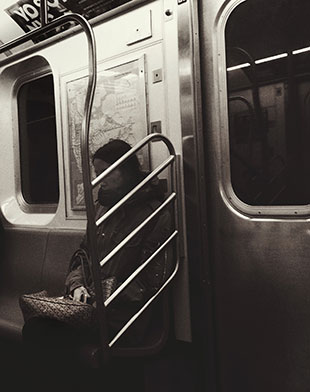
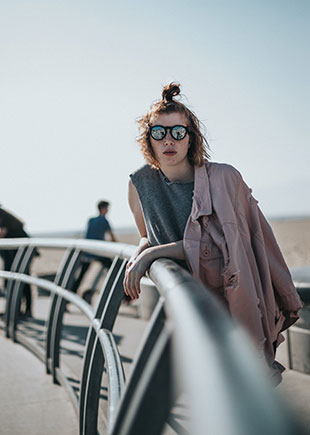
In the photo above, the woman is almost completely obscured. However, the diagonal lines of the metal bars bring your eyes directly to her.

They then lead downward where they are abruptly cut off right at the woman’s hand, clutching her bag. This set of diagonal lines helps to create a story element.

Try a Dynamic Composition

When a composition has many diagonal lines, it’s called a Dynamic Composition.

The diagonals create visual excitement and are somewhat subconsciously unsettling as opposed to a static composition.

A static composition makes use of horizontal and vertical lines that imbue a sense of security and safety.

creating visual excitement with diagonal lines

Visual Excitement with Diagonal Lines

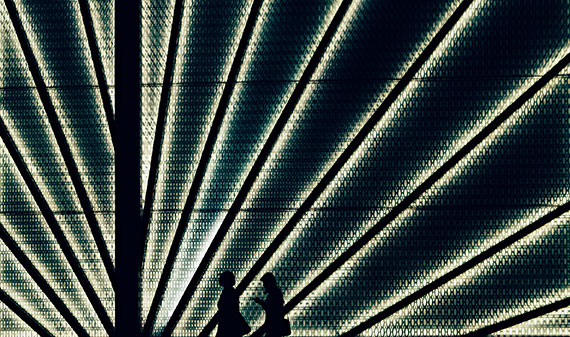
This photograph is a perfect example of dynamic composition. Do you notice how the diagonal lines lead right toward the subject? When they intersect and abruptly end at the robust vertical line, they create a focal point right next to the subject.

Critical Thought: Diagonal lines suggest a feeling of movement or direction. Objects presented in a diagonal line visually suggest instability in relationship to gravity. Since they’re neither vertical nor horizontal, your mind tends to imagine that something is moving or about to fall. This visualization creates tension and drama in a viewer.

diagonal lines in american flag

Diagonal Lines in American Flag

Key Lesson: Diagonal lines can be a huge asset to your composition toolbox. You can look for diagonal lines in a scene or create them by tipping your camera. The key to successfully tilting the camera for diagonal line use is to learn when the effect is appropriate.

Tilt Your Camera

Diagonal lines were created with this American flag by merely tilting the camera.

Tilting your camera to capture diagonal lines is also known as the “Dutch Angle” or the “Dutch Tilt.” German Expressionist filmmakers first popularized this use of a camera.

In the example above, you can see how this technique creates drama with the diagonal lines. The viewer feels like something is about to happen.

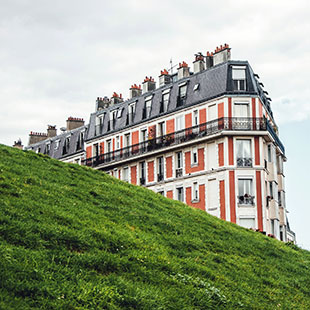
paris building behind hill

Photo by Paul DuFour

Let’s use this photo of a building in Paris, France to show how the Dutch Angle can really take a photo’s viewer for a ride.

This shot was taken with the camera horizon properly and appropriately set. We have a building behind a hill.

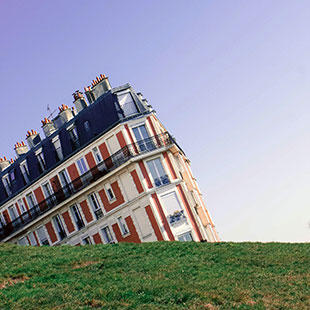
dutch tilt applied to photograph

Photo by Pauline Loroy

In this photo, the photographer applied a Dutch Tilt, making the hill the horizon line and the building askew. This picture is so much more dynamic than the first version!

Where to look for diagonal lines or scenes to apply the Dutch Tilt:

  • Architecture including roof lines
  • Bridges
  • Telephone and power line wires
  • Staircases
  • Canyons and rock formations
  • Body Language

Remember: Any horizontal line viewed from the side becomes a diagonal line. Any vertical line viewed from above or below becomes a diagonal line. You may be able to create a diagonal line by only moving your camera position.

IDEA: Take a trip downtown and spend an afternoon photographing buildings. Look for naturally occurring diagonal lines, but also create some diagonal lines by tipping your camera.

diagonal lines in the shadows

Photo by Kent DuFault

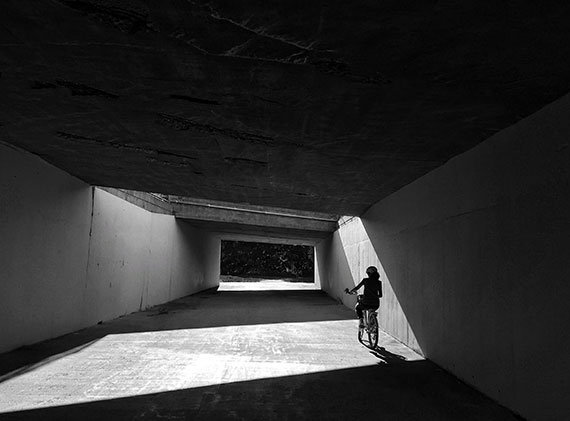
Another fantastic place to find naturally occurring diagonal lines is in the shadows!

Critical Thought: You can exaggerate diagonal lines using a wide-angle lens or in the positioning of your camera.

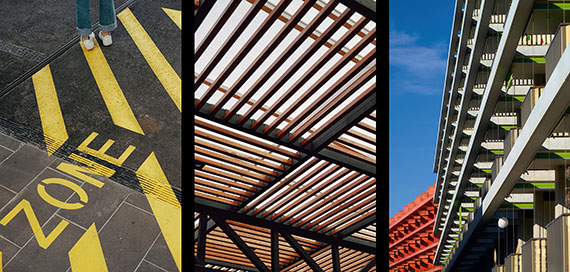
diagonal lines that emphasize depth of field

Left photo by David Clarke, center photo by Jorge Salvador, right photo by Ricardo Gomez Angel

Exaggerate Depth

By placing your camera closer to one end of the diagonal line, you can exaggerate depth perception.

Important Thought: You can start using diagonal lines with any camera, even your mobile phone camera. This technique requires no special tools. You simply need a keen awareness to this valuable composition tool.

lines on stairs create more depth

Lines on Stairs Create More Depth

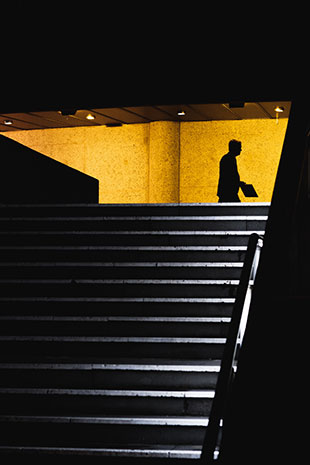
Diagonal lines can create a depth perception of going into a picture. It can also create a feeling of going up or down.

Man & Staircase – This example of a ‘found’ scene uses two diagonal lines. The lines complete three tasks. They move the eyes toward the man. They help to create a direction in the photo from left to right. Finally, they create a visual tension that manifests itself at the point of the subject.

Use Body Language

No discussion of diagonal lines and dynamic composition would be complete without talking about body language.

creating motion in a portrait with diagonal lines

Photo by Ben Weber

Take a look at the athlete photo above. This is a classic example of a diagonal line creating the visual effect of motion and direction in a still photograph.

portrait positioning that creates drama

Photo by KAL VISUALS

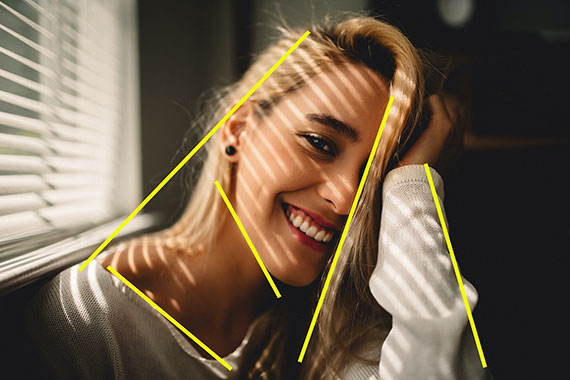
This portrait displays the prominent diagonal highlight lines from the window blinds.

However, it’s the body language diagonal lines that give this image its oomph. The positioning of the head and hands create drama that focuses us on the young woman’s eyes and smile.

Remember these skill points as you practice learning how to use diagonal lines.

  • Look into a scene with a specific eye toward spotting the diagonal lines.
  • You can create a sense of motion and direction using a diagonal line, especially with body language.
  • Try tilting your camera to create a diagonal line where one doesn’t exist.
  • Using diagonal lines, you are creating a dynamic composition, which in turn helps give your photograph a mood and a sense of story.
lines created with shadow and light

Lines Created with Shadow and Light

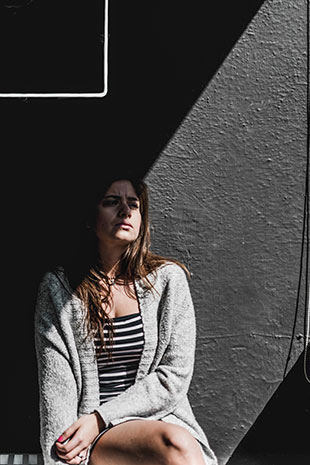
As with this portrait of a woman, diagonal lines do not have to be physical objects. They can be created through light, shadow, or color. This photographer placed his subject near some diagonal lines to help set a mood for the resulting photograph.

Why don’t you give this a try?

  1. Organize a photoshoot using a model. Scout out several locations that you can use diagonal lines to set a variety of moods – peaceful, angry, excited, unhappy, busy.
  2. Go on a photoshoot where you seek diagonal lines existing in scenes, and then use them in a composition. Try twisting the camera POV to create diagonal lines.
  3. Print out your photos – study and share your results.

What do you think?

  • Were you able to create different moods with your model and diagonal lines? What feelings did you capture? Share your results with others for opinions.
  • Were you able to locate existing diagonal lines in a scene and use them?
  • Did you create diagonal lines by tilting your camera? Do you feel that you achieved a more dynamic shot as a result?
  • What was your favorite diagonal line technique?
  • Can you see yourself using this in the future to create dynamic compositions for your photography?

About the Author:
Kent DuFault is an author and photographer with over 35 years of experience. He’s currently the director of content at the online photography school, Photzy.com

For Further Training, Deal Ending Soon:

This newly updated & expanded in-depth guide rolls years and years of practical knowledge, condensed into 239 pages packed with training, illustrations, and assignments. Advanced Composition goes far beyond knowing what composition is… (or, even knowing what the tools of composition are). Develop the SKILLS of anticipation, pre-visualization, and timing that are core to capturing great photography. It is currently 78% off for a limited time.

advanced composition

Updated: The Advanced Composition Guide at 79% Off (Learn More)

Broken into 84 key lessons, 38 assignments, & 117 self-check questions – it delves DEEP into the artistic and technical aspects of photographic composition. With this guide you will learn to SEE light, shadow, lines, curves, space, repetition, and focal points.

Only 1 day left: The Advanced Composition Guide at 78% Off


from PictureCorrect https://ift.tt/8LmOYbQ
via IFTTT

torstai 24. heinäkuuta 2025

PictureCorrect.com: This Tip Will Give Your Photos Powerful Perspective

This article is based on concepts from The Advanced Composition Guide which is currently 78% off if you want to dig deeper for further training.

The magnificence of the human machine, also known as the human body, gives us three-dimensional vision. It is that benefit that allows us to evaluate size and distance.

add perspective to photography

Photo by the U.S. Navy

In photography, that benefit becomes obscured, because photos are a two-dimensional medium. This fact of optics is one reason why a photo can appear lifeless and flat.

Quick Tip

One way to establish the size and scale of an object within a photo is to include another object of known size and proportion.

In the above photograph, we can see some of the crew members lined up across the aircraft carrier’s bow. This visual comparison between the human body and the vessel helps viewers comprehend the ship’s enormous size.

In the above photo of an aircraft carrier, not much helps us evaluate the aircraft carrier’s size. However, we do get a slight sense of distance.

add perspective to photography

Photograph by Kent DuFault

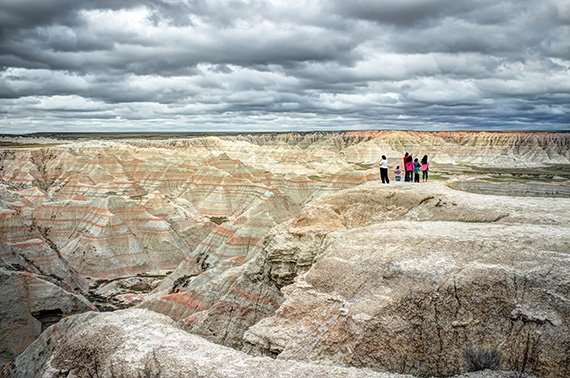
When your photos, especially landscapes, include people or some other object of a familiar size, it will give your resulting photo depth perspective and a sense of scale.

Without the inclusion of this family standing at the Badlands in South Dakota, it would be impossible to appreciate the vastness of the landscape.

add perspective to photography

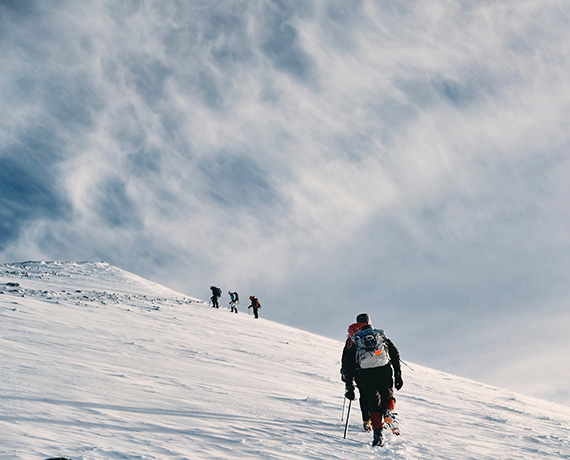
Photo by Todd Diemer

Including an object of a familiar size can also help to establish distance and vertical perspective. Suppose you take your hand and cover up the mountain climbers in the foreground of the above image. It becomes difficult to realize how far away from the camera are the climbers off in the distance.

add perspective to photography

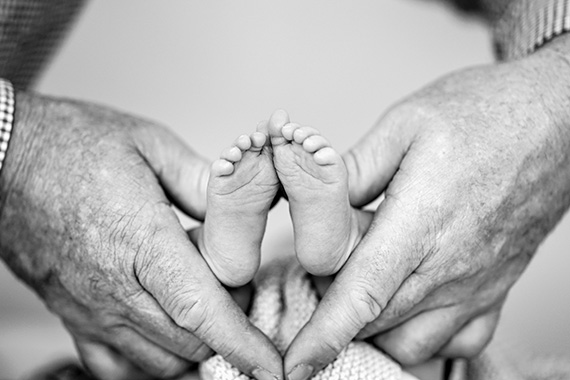
Photo by Lisa Cope

Scale and perspective work both ways.

It can tell us that something is large or far away—or it can tell us that something is small and up close.

The next time you’re out taking pictures, consider what you might include within the frame to give a viewer a sense of size and depth.

About the Author:
Kent DuFault is an author and photographer with over 35 years of experience. He’s currently the director of content at the online photography school, Photzy.com.

For Further Training, Deal Ending Soon:

This updated & expanded in-depth guide rolls years and years of practical knowledge, condensed into 239 pages packed with training, illustrations, and assignments. Advanced Composition (currently 78% off!) goes far beyond knowing what composition is… (or, even knowing what the tools of composition are). Develop the SKILLS of anticipation, pre-visualization, and timing that are core to capturing great photography.

advanced composition

Updated: The Advanced Composition Guide at 79% Off (Learn More)

Broken into 84 key lessons, 38 assignments, & 117 self-check questions – it delves DEEP into the artistic and technical aspects of photographic composition. With this guide you will learn to SEE light, shadow, lines, curves, space, repetition, and focal points.

Only a few days left: The Advanced Composition Guide at 78% Off


from PictureCorrect https://ift.tt/NxOG7yD
via IFTTT

keskiviikko 23. heinäkuuta 2025

PictureCorrect.com: Shadow & Light: Split Lighting Tips for Powerful Portraits

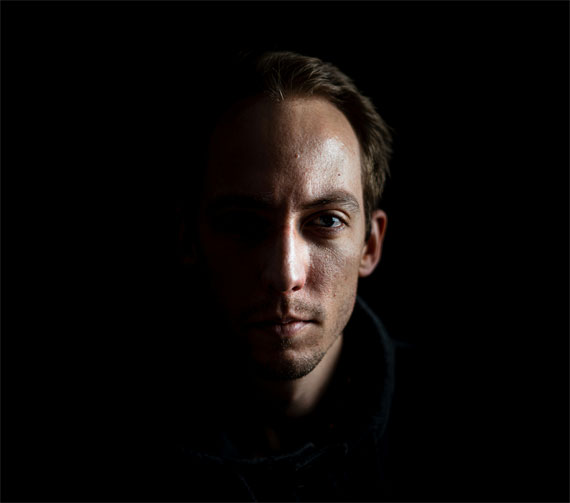
Split lighting is a popular technique in portrait photography where the light source illuminates only half of the subject’s face, creating a distinct division down the center of the face. This lighting style is dramatic and can be used to convey a range of emotions or add a sense of mystery to the portrait. Here’s how it works and some tips on how to achieve it:

Related reminder: only a little while left for Lighting Cheat Sheets ☀ Summer Sale
split lighting portrait

Photo captured by Peri Stojnic; 50mm, f/2.0, 1/100s, ISO 100

How Split Lighting Works

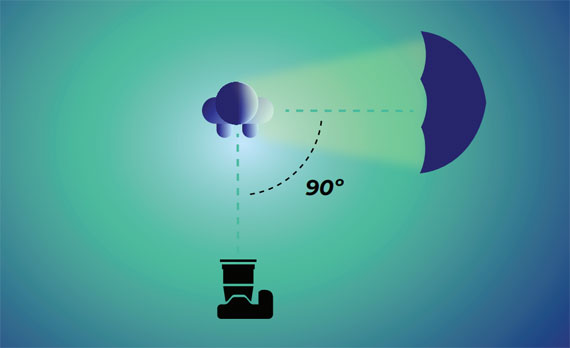
  1. Positioning the Light: The light source is positioned to the side of the subject at a 90-degree angle. It should be at the same height as the subject’s face to ensure that one side is brightly illuminated while the other remains in shadow.
  2. Intensity and Distance: The intensity of the light and its distance from the subject can affect the hardness or softness of the shadow line. A brighter or closer light source will produce a more defined and harsher shadow.
  3. Subject’s Face Orientation: The subject’s face should be turned slightly away from the light to enhance the split effect. The line of the nose often acts as a natural divider between the illuminated and shadowed sides.

Applications and Considerations

  • Emotional Impact: Split lighting is effective for creating moody, dramatic portraits. It can emphasize textures and shapes in the face, and is often used in genres like horror or film noir.
  • Character Portraits: It’s excellent for character studies, as it can highlight facial features or scars, enhancing the subject’s personality or backstory.
  • Not for Everyone: This technique might not be flattering for all subjects, particularly if they have asymmetrical features or if the portrait goal is to create a bright, airy feel.

split lighting

Tips for Achieving Good Split Lighting

  • Use Modifiers: Softboxes or umbrellas can soften the shadow if a less dramatic effect is desired. Conversely, a bare bulb or focused beam can enhance the drama.
  • Experiment with Backgrounds: Dark or neutral backgrounds can enhance the contrast and focus more attention on the subject.
  • Reflector Use: A reflector on the shadow side can fill in some details if the contrast is too stark.

Split lighting is a powerful tool in a portrait photographer’s arsenal, allowing for creative expression and the ability to play with shadows and light to create striking images.

For Further Training on Portrait Lighting:

Mastering portrait lighting techniques is an art form that presents its own set of intricate challenges. Each style demands a precise understanding of light placement, shadow control, and subject orientation to achieve its signature effect. These new Lighting Cheat Sheets (☀ Summer Sale Ending Soon) are designed to help.
portrait lighting sheets

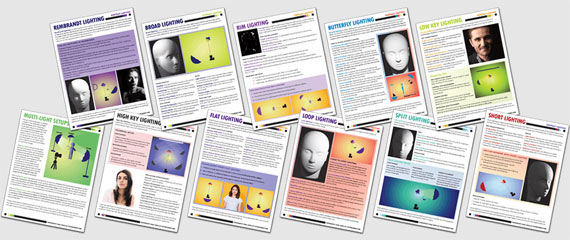
Portrait Lighting Cheat Sheets

Whether you’re a seasoned professional or just starting out, photography cheat sheets can be a valuable resource for improving your skills and taking your photography to the next level. By having all the key information you need in one place, you can focus on what’s important – capturing amazing photos.

Summer sale ending soon: Portrait Lighting Cheat Sheets at 80% Off


from PictureCorrect https://ift.tt/Mw6oCTz
via IFTTT

tiistai 22. heinäkuuta 2025

PictureCorrect.com: Removing Dust & Power Lines in Photo Editor

Whether you’re a professional or a hobbyist, one thing’s for sure—nothing ruins a great shot like dust spots or distracting power lines. In today’s fast-paced world of mobile photography and social sharing, editing should be seamless and efficient.

That’s where Luminar Neo shines.

Now available at a limited-time discount during the Summer Sale, Luminar Neo is packed with cutting-edge AI tools that make cleanup effortless so you can focus on creating.

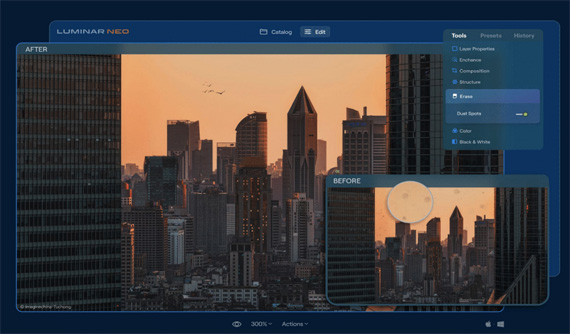
Dust Removal AI: Say goodbye to sensor spots and lens dust. This tool automatically detects and removes distracting particles in your skies and images—no more tossing out beautiful photos due to small imperfections.

Dust Removal

Line Removal AI: Instantly erase unwanted power and phone lines from landscapes, travel photos, and city scenes. Use it on its own or as part of Sky AI to get a clear view without tedious manual edits.

line removal photo

Removing unwanted power lines

These powerful features are just the beginning. Luminar Neo also includes a host of AI-enhanced tools for skin retouching, background removal, relighting, overlays, and even Luminar Share, a mobile companion app that lets you send final images directly from desktop to your phone for easy posting.

And right now, you can grab it all at a steep discount thanks to the Summer Sale—but only for a limited time.

Deal ending soon: Luminar Neo Summer Sale


from PictureCorrect https://ift.tt/x0dDs91
via IFTTT

maanantai 21. heinäkuuta 2025

PictureCorrect.com: How to Capture Leading Lines That Work

This article is based on concepts from The Advanced Composition Guide which is currently 78% off if you want to dig deeper for further training.

Leading lines are a “first try” composition tool for many photographers when they attempt to consciously compose a photograph.

composing a photo with leading lines

Photo by Jeremy Bishop

The reason for this is that they’re often easily spotted within a scene.

Leading lines can be comprised of physical objects, colors, and/or areas of contrast.

leading lines can be object, colors, or areas of contract

Photo found on Unsplash

There are two common mistakes and one common misconception when it comes to the use of leading lines.

example of leading line to nowhere specific

Photo by Simon Berger

The first common mistake is that the leading line(s) lead to nowhere specific (i.e. a subject), and the leading line(s) are not strong enough to be the subject themselves.

Critical Thought: Remember! Leading lines should lead somewhere specific and necessary to complete the composition.

eyes move past the subject and follow the road

Photo by Johannes Hofmann

The second and most common mistake is that the leading line(s) lead away from the subject or past the subject of the photo instead of bringing the eyes to the subject.

In the example photo above, the car is the subject as indicated by the placement within the frame.

The road is a leading line.

The problem is that the car doesn’t have enough visual weight to stop the eyes at the subject, and the eyes continue down the road.

This picture is an example of a leading line that isn’t working very effectively as it leads past the subject.

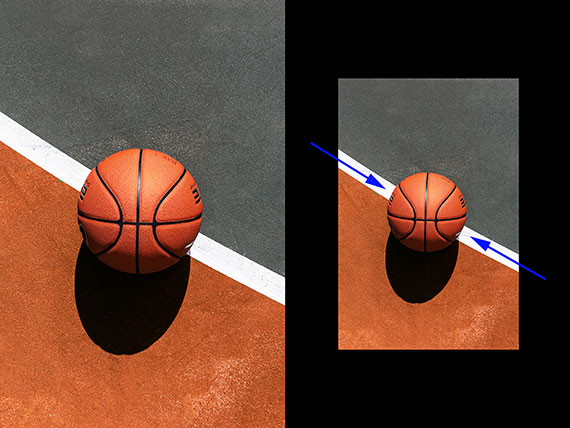
lines lead the viewer's eyes toward the basketball

Photo by tommy boudreau

The common misconception about leading lines is that they must always lead into the picture from foreground to background.

In the example photo (above) the basketball is the subject. The white lines on either side of the ball are leading lines. They lead the eyes toward the subject.

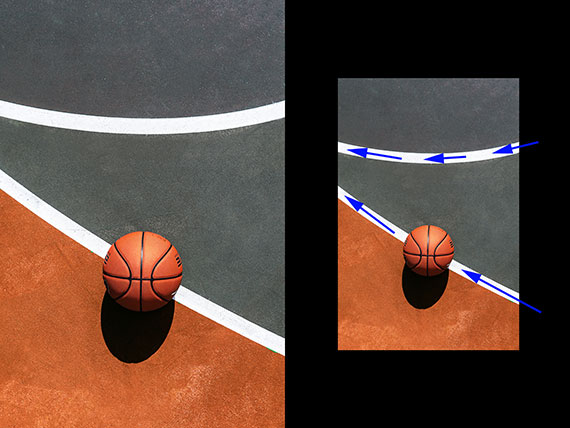
lines leading away from the subject

Photo by tommy boudreau

What if the photographer framed the scene like this example photo above? Do the leading lines still perform the proper function?

No. Now the lines lead the eyes off of the frame to the upper left.

The visual weight of the two heavy white lines merging at the edge of the frame carries significant visual weight.

They overpower the basketball and lead the eyes away from the intended subject.

Skill Points for Leading Lines

  • Identifying leading lines within a scene.
  • The leading line(s) should point toward the subject or near the subject.
  • A leading line can cause a composition problem if it leads past the subject.
  • A leading line can be created by light and shadow.
  • A leading line can be created by color contrast or with a single power color.
  • A pattern can create a leading line.
  • You can use leading lines within a composition that runs horizontally, vertically, or diagonally even if they don’t lead into the picture.
example of the subject being visually dominant

Photo by Tyler Nix

Let’s revisit point number three on the skill points list.

We previously discussed a leading line that worked against the subject in the car photo on the curvy road. The reason was that it led past the subject.

However, nothing in photography is set in stone.

The above photo also has a leading line that continues beyond the subject. However, in this case, it isn’t a problem.

Remember This: The most crucial element in any photograph is the visual weight of the subject. The subject should be visually dominant, even if every other component of the photo is piled up against it, the subject clearly stands out in the frame.

This reasoning is why the above photo still works even though the leading line leads past the subject!

Critical Thought: If a leading line leads past your subject, introducing a break in the leading line at the point of the subject, can tip the scale of visual weight back in favor of the subject. This composition tip is the case in the above image.
example of color contrast dominating the photo
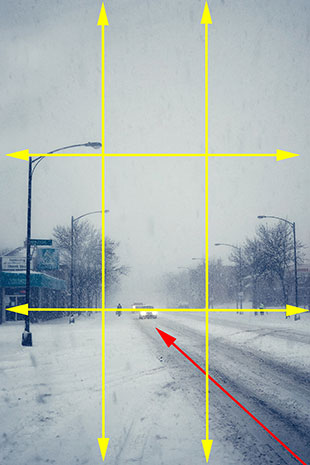
Photo by Thom Holmes

There are some very definite lines in this image. The intent was for them to lead the eyes to the subject.

However, there’s a problem here.

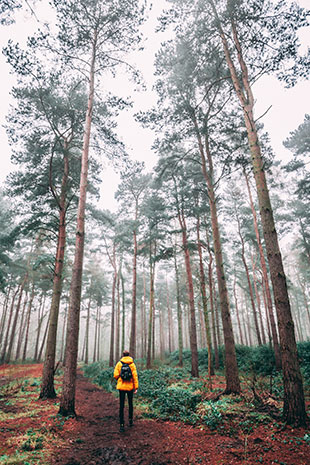
Color contrast is a strong composition element. It can easily dominate a composition, and that is what’s happening here in the photo of the hiker.

When you look at this image, the first thing to catch your eyes is the yellow and orange jacket.

Then what happens?

The lines of the trees lead your eyes up away from the subject.

This motivation is enhanced by the wide-angle upward perspective and the change in tonal value from dark to light.

The trees aren’t working as leading lines in this use.

Okay. What happens if you’re in this situation and want to make the most effective picture possible while using the trees as leading lines to the subject?

photo cropped so trees are leading lines

Photo by Thom Holmes

Analyze your scene.

This photo tells the same story as the previous version. Except, now the subject is dominant, and the trees lead toward the subject and not away from the subject.

Equipment

Some excellent news is that leading lines can be used with any camera equipment. That means any camera, including your mobile phone camera. It also means that any lens can work as long as you put some thought into composing the frame.

Lighting

Lighting that creates tonal contrast can also create leading lines.

Lighting leading lines

The subject of this photo is the doorway. Contrast formed by light and shadow has created leading lines that direct the eyes right to the door.

Remember: Lines of contrast can also work as leading lines.

Here’s a Helpful Tip: If your camera (including a mobile phone camera) allows you to turn on a Rule of Thirds grid, you should do so. Having the grid on will help you see how your leading line(s) moves through the frame and interacts with other elements, including the subject!

example of color contrast as a leading line

Photo by Etienne Girardet

As I stated in the skill points list, color contrast can often create a solid leading line. Make sure the line is working with your chosen subject.

red color contrast as a leading line

Photo by Johannes Hofmann

Here’s another variation on color contrast in a leading line. In this case, part of the leading line is the area of color contrast, and it’s also the subject of the photo! This image is a brilliant use of a leading line.

Previously, I mentioned power colors. The power colors that carry the most visual weight in a photographic composition are red, yellow, orange, white, and black.

The above photo works well because of the power color red. If the train had been blue, the effect would have been lost.

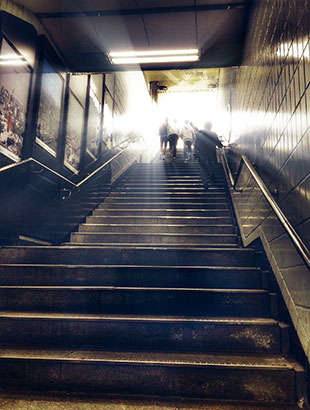
stairs as leading lines

Photo by Kent DuFault

This example photo is an interesting case study for leading lines.

The two handrails form lines that lead right to the subject. However, there’s a third line. It comes from the sixth bullet point in the skills list.

The repetition, or pattern, of the stairs also creates a line up toward the subject.

This is interesting to note because, at first glance, one might say these lines are horizontal.

They aren’t leading toward the subject.

Individually looking at each stair, that would be true. However, as a group, in repetition, they form a distinct line moving upward toward the ascending group of people.

Critical Thought: When working with leading lines, visualize beyond the obvious of what’s in the scene. Objects like handrails, roads, fences, and the like are the easily spotted leading lines. Tonal changes and color contrast require a bit more work. However, you can do it!

typical leading line shot

Photo by Kent DuFault

This photo taken during a blizzard is a typical leading line shot.

√ The subject is placed within the Rule of Thirds.

√ The light poles frame the subject.

√ The headlights are a focal point.

√ Finally, the road is a leading line.

Notice that the road leads directly to the subject, but not past the subject. At times, it’s okay for a leading line to extend beyond the subject. It depends upon the overall composition.

Now it’s Your Turn!

Grab your camera and kit bag and try the following.

1- Shoot a naturally found leading line of a physical object. Make sure that it leads to the subject and not past it (think of the Blizzard example and the Curvy Road example).

2- Find a leading line that leads nowhere. Then, insert your own chosen subject at the appropriate point along the leading line to achieve a great composition (think of the Trail into the Forest example and the Man in Forest example).

3- Use a leading line, or lines, to create a composition created by light and shadow (think of the Door example).

4- Create a picture with a leading line that enters the shot anywhere other than the foreground (think of the Basketball example).

Share your photos with family, friends, and colleagues. Ask them questions about the composition and your leading lines to determine if they got your intent for the image.

How did you do?

  • Do your leading lines direct the eyes toward the subject?
  • Do your leading lines support the subject without overwhelming the subject?
  • Are your leading lines readily noticeable?
  • Were you able to create a composition with a leading line that did not enter from the foreground, and did it successfully point toward the subject?

About the Author:
Kent DuFault is an author and photographer with over 35 years of experience. He’s currently the director of content at the online photography school, Photzy.com

For Further Training, Deal Ending Soon:

This newly updated & expanded in-depth guide rolls years and years of practical knowledge, condensed into 239 pages packed with training, illustrations, and assignments. Advanced Composition goes far beyond knowing what composition is… (or, even knowing what the tools of composition are). Develop the SKILLS of anticipation, pre-visualization, and timing that are core to capturing great photography. It is currently 78% off which ends soon.

advanced composition

Updated: The Advanced Composition Guide at 78% Off (Learn More)

Broken into 84 key lessons, 38 assignments, & 117 self-check questions – it delves DEEP into the artistic and technical aspects of photographic composition. With this guide you will learn to SEE light, shadow, lines, curves, space, repetition, and focal points.

Deal found here: The Advanced Composition Guide at 78% Off


from PictureCorrect https://ift.tt/apsTMkb
via IFTTT