keskiviikko 26. helmikuuta 2025

PictureCorrect.com: Night Photography Tips

Night photography is a typical “next step” for many budding photographers.

I have had numerous photographers ask me over the years, “What do I need to get started in night photography?”

My response is always, “What type of night photography do you want to do?”

To which they inevitably say, “I don’t know. I just want to take some cool night pictures.”

Well, it’s a bit more complicated than that. However, it isn’t as complicated as it used to be. In today’s blog post we delve into the longer exposure world of night photography.

Also don’t forget that there is only 1 day left for the February sale on the The Photography Action Cards from which today’s article is based on.

Check this out!
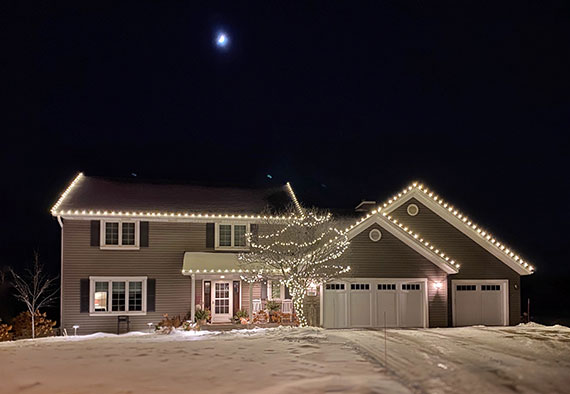
iPhone night photograph

Photo by Kent DuFault

I took this photograph in absolute darkness except for the moon and the holiday lights. Plus—and this is truly amazing—I took it handheld, without a tripod.

How could this be, you ask? I used my iPhone 11 Pro. It was taken at ISO 500 at 1/10th of a second.

It’s tack-sharp, and that’s pretty impressive.

There are three basic things that you need for night photography. From there, your experiences with night photographs will get wild and crazy.

What is necessary?

  1. You need the dark. I’m not trying to be coy here. Many times, we think it’s dark, and it’s not that dark. Some forms of night photography need the scene to be really dark.
  2. You need some form of light. This necessity is where night photography gets exciting, because there are infinite ways to create light. Each one can alter your picture. Think about it. You could have natural light, artificial light, starlight, stray light, sparkling light, colored light, tiny lights, big lights—the list goes on.
  3. You need some way to create a sharp picture. In my example picture above, it was the technology of the iPhone that helped create a sharp image. A more traditional method is a tripod and a remote shutter release mechanism. The gist is that you must devise a way to create sharp, non-blurry pictures.
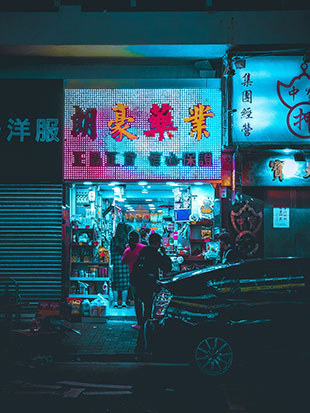
neon night light photography

Photo by Joel Fulgencio

For this article, we will concentrate on four aspects of night photography:

  • Photographing at night using strictly available light
  • Using moving light sources for creative effects
  • Mixing light sources
  • Capturing a good image with long exposures

We will talk specifically about these scenarios:

  • The nighttime cityscape
  • Using road traffic for composition
  • Painting with light
  • The dusk mixed-light shot

I know some of you will be hoping to capture the Milky Way after reading this article. That’s not going to happen. That takes a bit more instruction than can be included in this blog post. However, I will touch upon it and present you with a few things to consider for future reference.
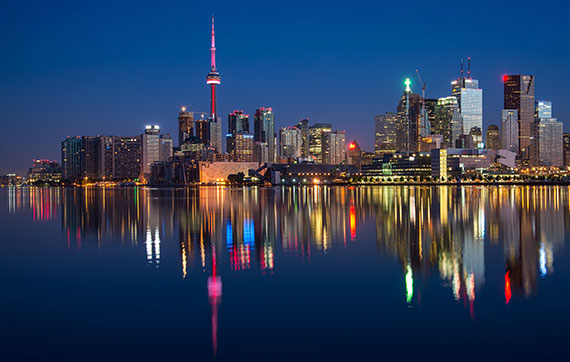
Photo by James Wheeler

Getting Started

If you’re new to night photography, the cityscape is the most accessible picture opportunity to get you started.

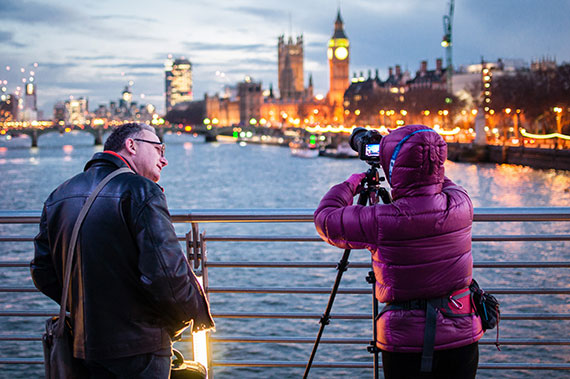
Unless you have a camera like my iPhone 11 Pro, you’re going to want a few specialized equipment pieces.

Equipment:

  • Camera: Any camera with a “bulb” setting and/or a maximum built-in shutter speed of up to 30 seconds.
  • Tripod: You’ll need something sturdy. You can also get by with placing your camera on a sturdy surface, but that will be far less flexible.
  • Remote Shutter Release: You can also get by with your camera’s self-timer, if you aren’t using the bulb setting.
  • Lens: Ideally, a wide-angle or moderate telephoto (14mm-100mm). Depending upon the light level, image stabilization can be helpful.
  • Sandbag: You can use this to further stabilize a tripod or support your camera if you place it on a sturdy surface. There are commercially available sandbags explicitly made for photography, or you can make your own.
  • Miscellaneous items: A flashlight or headlamp will help you figure out camera settings in the dark. A non-reflective 8-by-10-inch matte black card (available at any art store) will let you block light from entering the lens without having to touch the camera (more on this in a minute).
night photography setup instructions

Photo by David Marcu

The Best Conditions for Starting in Cityscape Night Photography

  • Pick a location that provides a beautiful view of the skyline and city lights
  • If possible, include a body of water in the foreground for reflections
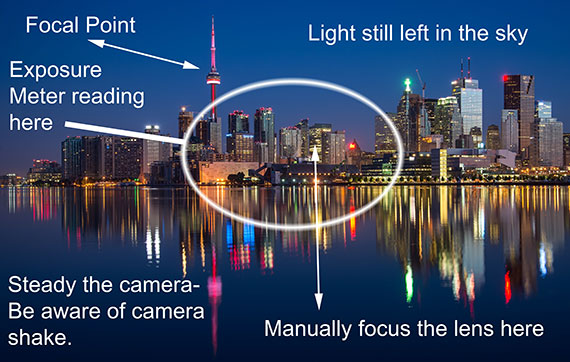
  • Arrive at your location and get your gear prepared around 30 minutes after sunset
  • Start shooting while there is still some light in the sky
  • Set your camera to manual mode or aperture priority
  • Set the ISO to 400, or up to 800
  • Set the lens to manual focus
  • Set the metering mode to center-weighted
  • Compose using the rule of thirds
  • If possible, include a focal point
  • Begin shooting as the sky darkens, and the city lights turn on
  • Monitor the shutter speed: be aware of even minor camera movement
Night Cityscape

Pro Tip: Your best shots will occur when the sky is close to the same exposure value as the cityscape. As the sky darkens, you will eventually lose a lot of detail in the shadows.

Using Road Traffic for Composition and Effect

Once you have a few nighttime cityscapes under your belt, the next logical step is to combine a cityscape with road traffic for a special effect.

Remember This: I call these shots cityscapes, but they can be created anywhere there are buildings and lighting.
nighttime long exposure example

Photo by Kent DuFault

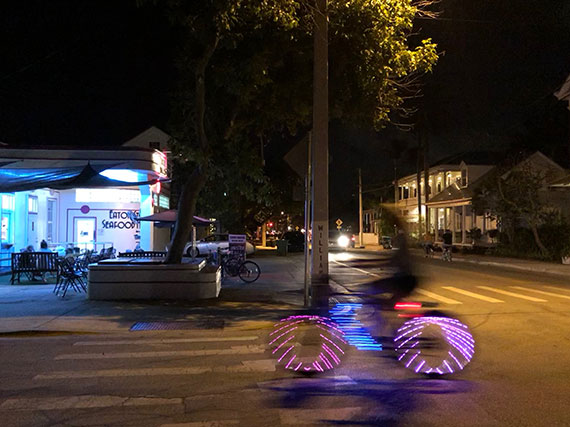
This night shot was taken in the town of Key West, Florida, using the same principles outlined above.

Pro Tip: Notice how the sky in the Key West picture has gone entirely dark. If you’re shooting this late, try composing your shot so that some bright object with lighting breaks up the black sky. You can see how I did that with the tree.
long exposure highway example

Photo by Patrick Hendry

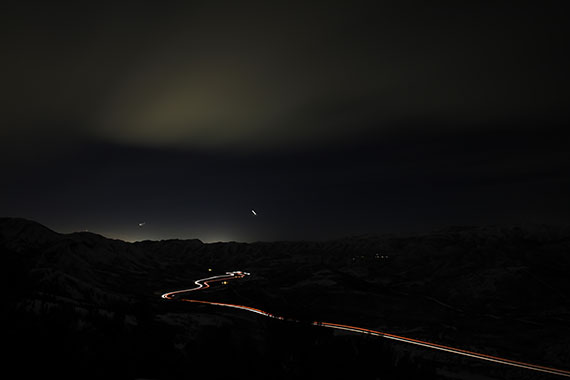
To include road traffic in your nighttime photos, follow the previous instructions with the following additions.

  • Pick a location that looks down onto the road (the higher the elevation, the better)
  • Use only manual mode
  • Set the aperture between f/4 and f/8 (you will need to experiment with this)
  • Make sure to set your focus before it gets too dark
  • Take a camera meter reading, and then reduce the exposure from one stop to four stops, depending upon the ambient light surrounding your road; for example, the first road picture in this article would be a reduction of around one stop, while the example photo above would be closer to three or four stops’ reduction
  • Depending on the traffic level, your shutter speed might be anywhere from half a second to 30 seconds. Again, the first example in this article would be closer to half a second because there is a lot of traffic as a light source, while the second example would be closer to 30 seconds because only a few cars were on the road, meaning less light

Painting with Light

Painting with light can take many different forms.
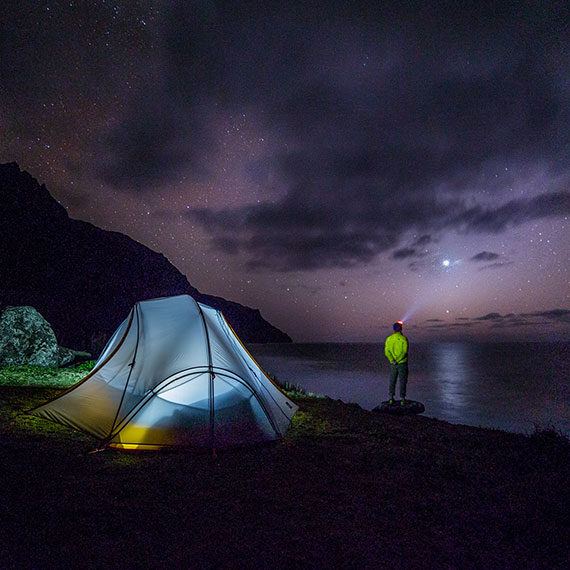
night photography example to dissect

Night Photo

Think of it as an artist with a blank paint canvas. They apply different paints to the canvas, and it comes to life as a complete image.

Crucial Thought: In nighttime photography, it’s dark, and the darkness creates a blank canvas within the camera. Earlier, I alluded to the importance of darkness when you attempt nighttime photography. In many places, it won’t be as dark as you initially believe it is. That’s why in the equipment section, I suggested you include a matte black card in your kit. The card helps you to block any light that you don’t want to enter the camera—without touching the camera. For example, let’s say you’re in the middle of a long-exposure cityscape shot, and a car with headlights on is approaching. You hold the card in front of the lens as the vehicle passes. When it is out of view, you remove the card and continue to expose the picture. This technique is one of the advantages of using the bulb setting instead of automated shutter speeds. You count the seconds with the shutter locked open. You can manually stop the exposure with the card if necessary.
decoded night photography

Light Sources

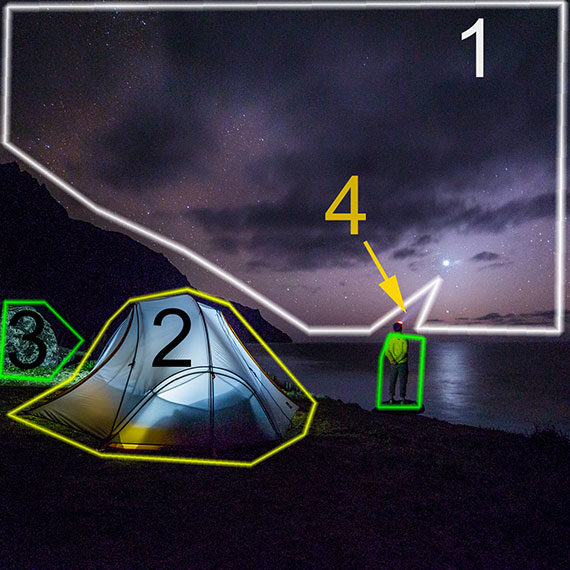
This photograph has four light sources that are “painting” the black canvas of darkness.

  1. The illumination in the sky is light source number one.
  2. A lantern inside the tent is light source number two.
  3. An electronic flash positioned to illuminate the bushes and the man standing is light source number three.
  4. The headlamp on the man’s head is light source number four.

Key Point: Painting with light is an advanced technique, and here is why. Each light source has a different intensity and requires a different length of time to expose inside the camera properly. This fact is where your black card comes in handy as you can cover the lens as you turn different light sources on and off.

Give it a try!

Try some light painting. Gather two or three light sources. They can be an electronic flash, a flashlight, a plug light, car headlights, etc. Keep things simple to start. Place a model in a dark area and use one light to expose the model and the additional lamps to illuminate the environment around them.

The Dusk Mixed Light Shot

I touched upon the value of having some light in the sky already, but I wanted to add two additional tips.
storm long exposure

Photo by Jean Beaufort

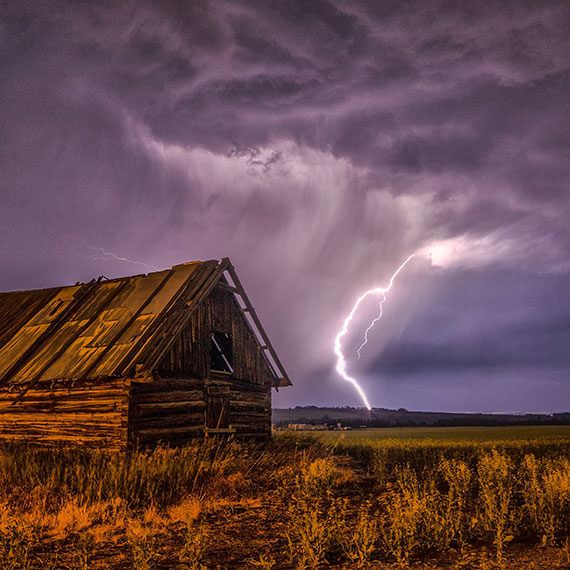
Outside exotic light sources can create other opportunities for nighttime photography.

Lightning can quite literally illuminate an entire landscape. Make sure you are a safe distance away. Follow all of the tips listed for capturing road traffic with these additions.

  • Use a wide-angle lens
  • Set the aperture between f/8 and f/11
  • Lock the camera shutter open using the bulb setting
  • Place your black card in front of the lens
  • When the lightning begins to flash, pull the card away—allow one to three flashes, depending upon how large they are
  • Close the shutter
nighttime photography tips

Photo by Lethu Zimu

When shooting at dusk and on into the night, there may be moments where you don’t have a tripod or cannot use one.

Pro Tip: Use the image stabilization option on your camera, if possible. Also, press your body up against a solid surface as you take the picture. This action will help you hold the camera steady at slower shutter speeds.
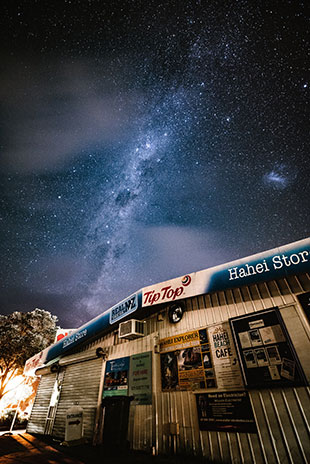
how to take starry night photos

Photo by Casey Horner

I mentioned the Milky Way at the beginning of the article.

Many of the tips you’ve read here will help Milky Way photography and other astrophotography subjects.

The difference is that you must learn to locate these celestial bodies within the sky and take your search for darkness to new and higher levels—and that’s a whole other article.

About the Author:
Kent DuFault is an author and photographer with over 35 years of experience. He’s currently the director of content at the online photography school, Photzy.com.

For Further Training, Deal Ending Tomorrow:

65 beautifully designed & printable Photography Action Cards are now available that will give you over 200 photography assignments, covering everything you can imagine. They are currently 88% off until the end of the month, February 28, if you want to try them out.

photo action cards

New: The Photography Action Cards (Click to See How They Work)

These Action Cards discuss a photographic topic, provide you with suggested considerations, and give you specific photographic assignments.

Only 1 day left: The Photography Action Cards at 88% Off


from PictureCorrect https://ift.tt/s1UWov4
via IFTTT
tiistai 25. helmikuuta 2025

PictureCorrect.com: Panasonic Unveils the Lumix S1RII Full-Frame Camera

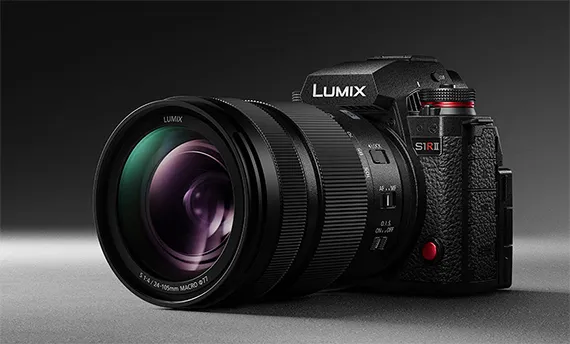
Panasonic has unveiled the LUMIX S1RII, the latest full-frame mirrorless camera in the LUMIX S Series. Designed for professional photographers and videographers, the camera introduces a newly developed 44.3MP BSI CMOS sensor coupled with a high-performance L2 processing engine to enhance image quality and video capabilities.

lumix s1rii

Enhanced Image Quality and Resolution

The LUMIX S1RII boasts a 44.3MP full-frame BSI CMOS sensor, which captures fine details and textures with precision. This new sensor improves low-light performance and dynamic range, ensuring high-quality results across various lighting conditions. For those needing even more detail, the camera offers a 177MP high-resolution handheld mode, allowing photographers to capture extremely sharp and detailed images without requiring a tripod.

Advanced Video Capabilities

A key highlight of the S1RII is its 8K video recording capability with 14 stops of dynamic range, providing excellent detail and color depth. The 6.4K Open Gate recording feature maximizes flexibility for cropping and composition in post-production. A future firmware update will enable 8.1K/7.2K recording, expanding its potential for high-end video production. The internal 5.8K Apple ProRes RAW HQ/ProRes RAW recording to a CFexpress Type B card eliminates the need for external recorders, streamlining workflows for professional videographers.

Additionally, cropless E.I.S. distortion correction ensures that wide-angle video footage maintains its original field of view, reducing distortion and preserving image integrity.

Advanced Autofocus and Shooting Performance

The LUMIX S1RII features Phase Hybrid Autofocus with AI tracking, which improves subject recognition and focusing accuracy. It can detect and track faces, eyes, and fast-moving subjects with ease, making it well-suited for dynamic shooting scenarios.

The camera supports 40 fps high-speed continuous shooting with autofocus tracking, allowing photographers to capture fast-moving subjects without missing critical moments. The SH pre-burst mode ensures that images are captured even before the shutter button is fully pressed, increasing the chances of capturing decisive moments.

Improved Stabilization and Ergonomic Design

Stability is another area where the S1RII excels. It offers 8.0-stop in-body stabilization, which significantly reduces camera shake for handheld shooting. The Dual I.S. 2 system provides additional stability when using compatible lenses, ensuring sharp images even at longer focal lengths.

The compact body design includes a tilt-free-angle monitor, allowing for flexible shooting angles and better adaptability in different shooting conditions. This makes the camera comfortable to use for extended periods and enhances its usability for both photography and videography.

Seamless Workflow Integration and Smart Features

Panasonic has integrated various tools to streamline professional workflows. The S1RII is the first LUMIX camera to support Capture One tethering, allowing photographers to shoot directly into editing software for seamless studio work.

Additionally, Frame.io integration simplifies cloud-based collaboration by enabling quick transfers for editing and review. The introduction of the LUMIX Lab and LUMIX Flow apps further enhances workflow efficiency, providing LUT management, video production assistance, and automated file organization.

Battery Grip for Extended Shooting

For those needing extended shooting capabilities, Panasonic offers the DMW-BG2 battery grip, which allows for hot-swappable batteries. This feature is particularly useful for long video shoots or time-lapse photography, reducing downtime and maximizing productivity.

Availability and Pricing

The LUMIX S1RII is set to launch in late March 2025, with a retail price of $3,299.99. It will be available through Panasonic’s authorized retail partners.

For Help with Camera Settings:

Have you ever wanted to photograph an amazing moment but missed the shot because you didn’t know the right camera settings to use? That’s where these Camera Cheat Sheets come in. They are currently 75% off today if you want to check them out.

fundamental photography sheets

New: Fundamental Photography Cheat Sheets

Whether you’re a seasoned professional or just starting out, photography cheat sheets can be a valuable resource for improving your skills and taking your photography to the next level. The perfect companion for any photographer. Print one out whenever you need it.

Offer ending soon: The Fundamental Camera Cheat Sheets at 75% Off


from PictureCorrect https://ift.tt/urKLxhc
via IFTTT

maanantai 24. helmikuuta 2025

PictureCorrect.com: Minimalism: Home Photography Activity

Many of us are spending a lot of time at home these days for the cold weather. Why not use this time to learn a fun and exciting photography technique called Minimalism?

This article is based on concepts from the The Photography Action Cards which are currently on sale.

example of minimalist indoor photography

Photo by Henry & Co.

The definition of Minimalism is a genre of photography that emphasizes the extreme simplification of form, as by the use of shapes, colors, tone, and negative space.

To get started, you’ll need to locate some objects within your home that have interesting shapes and colors.

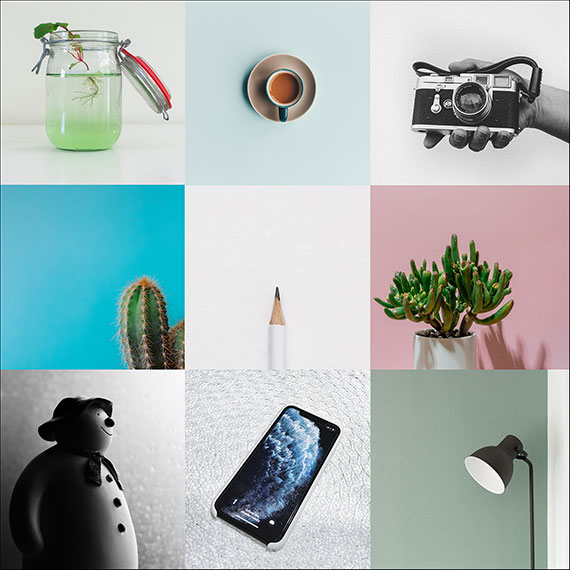
Here’s some inspiration for you.

minimalist photo inspiration

Top left photo by Maarten Wijnants, top center photo by Annie Spratt, top right photo by Leonard Rb, middle left photo by Annie Spratt, center photo by Yoann Silonine, middle right photo by Ruslan Bardash, bottom left photo by James L.W., bottom center photo by David Švihovec, bottom right photo by David van Dijk’s

Lighting

Next, you need to select your lighting. A window with indirect light (no direct sunshine), can be your best option if you are really new to photography. If you don’t have an appropriate window, then you could do this activity on an overcast day.

IDEA: There are no set rules to photo creativity. Let some sunshine blast into your picture and see what happens!

Having some additional lights does provide you with more control. If you don’t own photography lights specifically, no problem. Try using table lamps, flashlights, or any other light source that you have around the house.

IDEA: If you use various light sources, and you’re worried about the color balance, transform your project photos into monochrome black and white pictures!

example how to create minimalist photos indoors

Photo by Sarah Dorweiler from Aesence

Indirect window light will produce soft shadows and muted colors. This lighting scheme makes it easier to determine your exposure setting.

minimalist photo using bright light through window

Photo by Henry & Co.

Bright sunlight through the window produces sharper shadows and vibrant colors. Determining exposure for this lighting scheme can be tricky. Take a test shot and adjust as necessary.

Next, you need a backdrop.

In most cases, you’ll want to select a backdrop that sets off your chosen subject, either through color, tone, or texture.

Here are some suggestions.

• Various types of wood
• A wall in your home
• Bed sheets or blankets
• Art paper of varying colors
• Cardboard
• Vinyl sheeting
• Plastic – smooth or crumpled
• Tinfoil
• Pieces of rock or brick
• Countertops or tables

You get the idea. Once you start looking, you’ll be amazed at what you can find around the house.

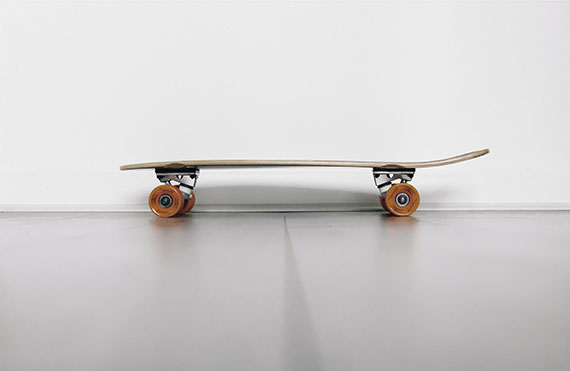
skateboard used for minimalist photography

Photo by Imani Clovis

Setting Up

1. Putting your camera on a tripod is a huge advantage. It allows you to set up your picture and then make changes to your set or lighting while the camera doesn’t move.

2. For a shooting mode, use aperture priority or manual mode. The goal is to set your depth of field so that everything you want in focus is actually in focus. Ideally, you’re on a tripod, so the shutter speed is less of a concern. If the shutter speed drops below 1/60th, I recommend the use of a cable release, so that you don’t cause camera shake while taking your picture.

3. Start with a middle of road aperture, such as f/5.6 or f/8. Adjust as necessary to get your depth of field correct.

4. Set your ISO to 100-400. You want to avoid the digital noise that comes with higher ISO settings.
5. If you have the option, shoot in camera raw.

6. Auto white balance is acceptable if you’re shooting in camera raw. If you’re shooting in .jpeg, then you’ll want to set the white balance to the appropriate light source.

7. Your choice of lens is wide open and based upon your vision of the final picture. Most of the time, you will likely be using a lens somewhere between 35mm up to 135mm, or a zoom lens within that range.

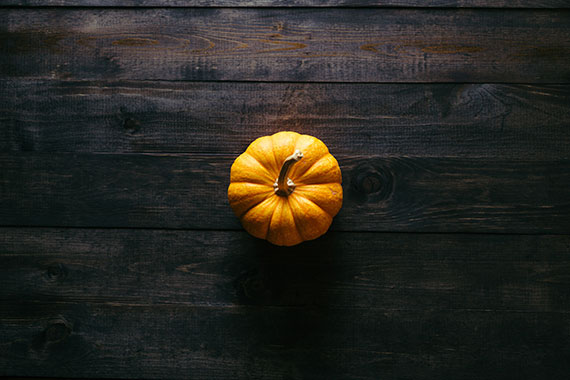
minimalist pumpkin photo with dark background

Photo by Patrick Fore

IDEA: Any white object can be used to lighten up the shadows in your picture. The white object is called a bounce card or a reflector, and it can be a wall, a bedsheet, a towel, or an artboard. Many professional photographers use a product called ®Foamcore, which is a rigid foam-based board that you can buy at most art supply stores or some photography shops. If you want more light popping off your reflector, take some cardboard and glue tinfoil to it. If you leave the foil smooth, it will reflect a brighter harsher light. If you crumple the foil up and then smooth it back out before gluing it onto the cardboard, the resulting light will be brighter but softer.

old typewriter in minimalist photo

Photo by Florian Klauer

Negative Space

A large part of Minimalist composition is negative space. I’m sure you’ve noticed that all these example photographs have large areas of empty space surrounding the subject. This is a negative space. But don’t take negative space lightly – it should, in some way, enhance your theme, thus adding visual energy to the composition.

example of minimalist photo with negative space

Photo by Helena Hertz

Key Thought: Many subtle factors can contribute to your Minimalist photography. Your photo should contain liberal use of negative space. It should also be a very simplistic composition that makes use of only one to four colors – often one of those colors is a primary color. Also, shape and repetition are common elements within Minimalist artwork.

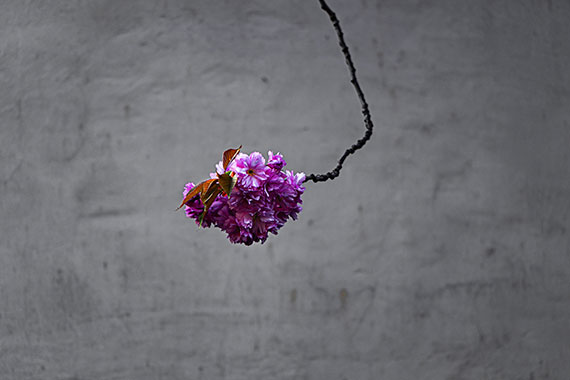
simplistic composition of flowers

Photo by Raphael Renter

Skill Points for Minimalism

√ Try composing your picture in a less literal sense (have some fun with it)
√ Simplify, typically one subject works best in Minimalism
√ Think in terms of negative space, shape, and color (try to send a message to your viewer)

Great News

You don’t need fancy equipment to master Minimalism. You can do this – even with a smartphone camera. All you need is your creativity and some time.

Advanced Technique

Minimalist photography is often portrayed as being light and bright.

However, it doesn’t need to be. In fact, low key Minimalist photography can be some of the most dramatic.

It does require a bit more effort with the lighting. That said, your results will be truly satisfying.

In case you’re not sure what the term low key means…

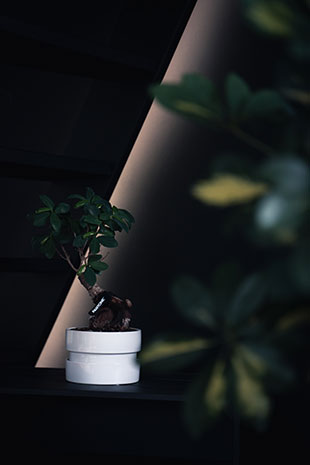
Low Key Photography: A low key image is one that contains predominantly dark tones and colors. It should also include some small area of a white or bright tone to create a full tonal range picture. The example photo (above) is an excellent example of a low key Minimalist photograph.

IDEA: Study the low key photograph above. Did you notice how the photographer created layers in the image? Your minimalist photos don’t require a flat background. Creating Minimalist layered photography is an advanced skill. But you can do it. To experiment with this skill, you need to focus on the lighting.

example of minimalist photo with layers in backround

Photo by Anshu A

Post-Production

Minimalism doesn’t require fancy post-processing skills. However, you can further enhance your vision with post-processing should you desire.

This is one area where presets and actions can be a lot of fun.

You’ve created your Minimalist set, and you’ve adjusted your lighting. You take the picture.

Now spend some time running it through presets and actions for various creative options.

The last example photo (above) is a perfect example of post-production taking a Minimalist photograph to the next level. You can even perform edits like this on your smartphone using apps like Snapseed and Lens Distortions.

How did you do?

Once you’ve finished your Minimalism photography project, sit back and look at the results.

• Does your subject command immediate attention?
• Does your background complement the subject without overwhelming it?
• Does your lighting draw attention to the color, shape, and lines of your subject?
• Did you make use of negative space?
• Was your exposure accurate?
• Did your depth of field capture everything in focus that you wanted it to?
• Did you experiment with different light sources and types of light?
• How was the color in your final image, or did you go black and white?
• Was your final image sharp?
• Did you play around with post-production?
• Do you feel that your final photograph powerfully conveys your thoughts to a viewer?

About the Author:
Kent DuFault is an author and photographer with over 35 years of experience. He’s currently the director of content at the online photography school, Photzy.com.

For Further Training and Exercises:

65 beautifully designed & printable Photography Action Cards are now available that will give you over 200 photography assignments, covering everything you can imagine. They are currently 88% off today if you want to try them out.

photo action cards

New: The Photography Action Cards (Click to See How They Work)

These Action Cards discuss a photographic topic, provide you with suggested considerations, and give you specific photographic assignments.

Deal ending soon: The Photography Action Cards at 88% Off


from PictureCorrect https://ift.tt/udbKFTf
via IFTTT

lauantai 22. helmikuuta 2025

PictureCorrect.com: Luminar Photo Editor 3rd Anniversary Sale

It’s time to celebrate! Luminar Neo is marking its 3rd anniversary, and to show appreciation for photographers worldwide, Skylum is offering exclusive discounts and limited-time offers.

Found here: Luminar Neo Anniversary Sale

Whether you’re a seasoned professional or an enthusiast looking to enhance your workflow, there’s never been a better time to explore Luminar Neo’s powerful AI-driven tools.

photo editor anniversary

What’s New in Luminar Neo?

Over the past year, Luminar Neo has introduced a range of game-changing features designed to give photographers more creative control. Here’s what’s new:

🎨 Color Transfer

Bring the mood of one image into another with Color Transfer. This AI-driven tool allows you to match the color palette of any reference photo to your own, making it easier than ever to create consistent tones across your projects.

🌅 Twilight Enhancer AI

Want to make your blue hour shots more magical? Twilight Enhancer AI fine-tunes the colors, tones, and glow in low-light images, ensuring your evening cityscapes and landscapes pop with atmospheric depth.

🌊 Water Enhancer AI

Perfect for landscape photographers, Water Enhancer AI automatically adjusts the texture, clarity, and reflectivity of water. Whether you’re photographing lakes, rivers, or the ocean, this tool helps you create crisp, realistic, or dreamy aquatic scenes.

💡 Relight AI

Say goodbye to complicated lighting adjustments. Relight AI allows you to fine-tune the brightness of foregrounds and backgrounds independently, making it effortless to recover details and create balanced exposures.

📷 HDR Batch Processing

For HDR enthusiasts, HDR Batch Processing makes merging multiple exposures seamless. This feature helps you process multiple high-dynamic-range images at once, saving time while maintaining impeccable detail and color accuracy.

🎉 Anniversary Sale: Get Luminar Neo at a Special Price
To celebrate three years of innovation, Luminar is offering exclusive discounts for a limited time. Whether you’re looking to upgrade, switch from another editor, or start fresh with AI-powered enhancements, this is the perfect opportunity.

Only hours left: Luminar Neo Anniversary Sale


from PictureCorrect https://ift.tt/BgDuUEF
via IFTTT

torstai 20. helmikuuta 2025

PictureCorrect.com: Perspective and Forced Perspective in Composition

In the dynamic and expressive realm of photography, perspective holds the power to transform the mundane into the extraordinary. It enables photographers to manipulate spatial dimensions, bring new meanings to subjects, and create uniquely compelling narratives. But what exactly is perspective, and how does it interact with the intriguing concept of forced perspective? Let’s delve into these fascinating areas of photography composition. Also keep in mind that the winter sale on the popular Composition Cheat Sheets ends soon!

forced perspective

Photo captured by Alex Schwab

Understanding Perspective in Photography

The term “perspective” in photography refers to the representation of three-dimensional space on a two-dimensional plane (i.e., the photo) in a way that replicates human vision. Perspective is determined by the relationship between the camera and the subject.

In a nutshell, perspective can change how objects relate to each other within the frame, both in terms of size and spatial relationship. You can capture different perspectives by changing your camera’s position, angle, or focal length. There are a few common types of perspectives to consider:

  • Linear Perspective: This is observed when parallel lines appear to converge as they recede into the distance, creating a sense of depth.
  • Aerial Perspective: Also known as atmospheric perspective, this technique involves capturing the natural haze and color shifting in the atmosphere to suggest distance.
  • Vertical Perspective: This is the perception of depth and size based on an object’s height in the frame. Objects lower in the frame appear closer than objects higher in the frame.

The Art of Forced Perspective

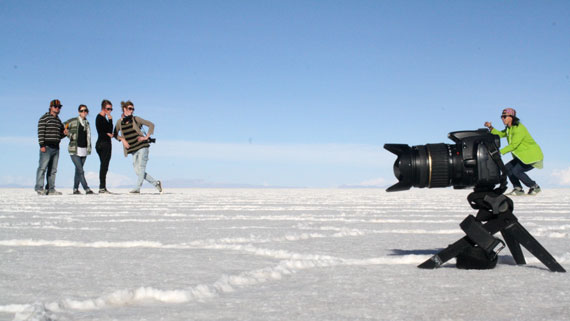
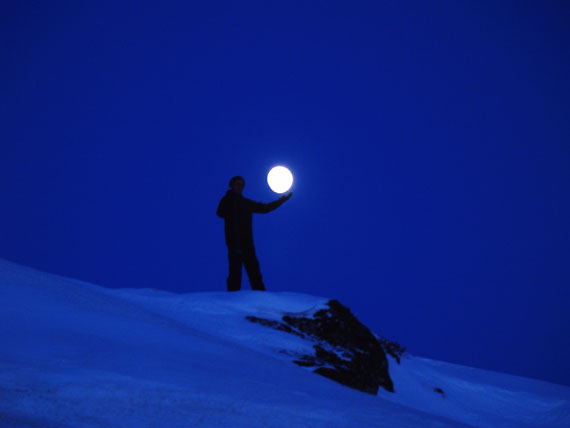
Forced perspective is a clever technique where photographers use optical illusions to make an object appear larger, smaller, closer, or further away than it actually is. This is achieved by manipulating the spatial relationships of the objects within the frame, often using depth of field and positioning to play tricks on the viewer’s perception.

A common example of forced perspective is the classic “holding up the Leaning Tower of Pisa” tourist photo. Even though we logically know the person isn’t actually holding up the tower, the photographer’s careful alignment creates the illusion that they are.

holding the moon

Techniques for Creating Forced Perspective

Creating effective forced perspective images requires a deep understanding of spatial relationships and some creativity. Here are a few techniques:

  1. Object Placement: Place your subjects at varying distances from the camera to manipulate their size relationship.
  2. Camera Angle: Low or high angles can exaggerate the size and importance of a subject.
  3. Depth of Field: Use a wide depth of field to keep both foreground and background objects in focus, emphasizing the illusion.
  4. Lens Choice: A wide-angle lens can enhance the sense of distance or size disparity between objects.
  5. Lighting: Use light and shadow to emphasize depth and spatial relationships.

The Impact on Composition

Both perspective and forced perspective significantly affect the composition of your images. They can help guide the viewer’s eye, create a sense of depth and scale, emphasize certain subjects, and create intriguing visual narratives.

For example, a low perspective can make a subject appear dominant and powerful, while a high perspective can make it appear small or insignificant. Forced perspective can tell playful stories or make the viewer question their perception of reality.

In conclusion, mastering perspective and forced perspective allows photographers to fully exploit spatial relationships and depth, adding layers of meaning and interest to their compositions. So next time you’re out with your camera, experiment with these techniques and see how they transform your images and the stories they tell.

For Further Training on Composition:

Are you ever tired of your photos looking dull or boring? These new Composition Cheat Sheets are designed to help. With clear, concise information on all the essential elements of composition, you’ll never be unprepared again. They are currently 81% off for a winter sale ❄ if you want to check them out.
composition cheat sheets

Composition Cheat Sheets (see all the elements covered)

The perfect companion for any photographer. Print one out whenever you need it. These cheat sheets consolidate crucial composition-related information, allowing you to concentrate on what truly matters – composing striking photographs.

Only 1 day left: The Composition Cheat Sheets Winter Sale


from PictureCorrect https://ift.tt/xnBgYhw
via IFTTT

keskiviikko 19. helmikuuta 2025

PictureCorrect.com: Door Photography Tips

There is something magical about doorways and the inspiration that comes with wanting to photograph them.

This article is based on concepts from The Photography Action Cards which are currently 88% off if you want to dig deeper for further training.

This doorway, pictured below, was captured while hiking the Blue Path in Italy, from Monterosso to Vernazza, along the gorgeous Italian Riviera in Tuscany.

how to photograph doors

Photo by Kent DuFault

It is one of the hundreds, maybe thousands, of fascinating doorways that I’ve photographed in my lifetime.

Doorways seem to inspire virtually everyone, from entrepreneurs to actors and even politicians.

“We keep moving forward, opening new doors, and doing new things, because we’re curious and curiosity keeps leading us down new paths.” – Walt Disney

“I feel very adventurous. There are so many doors to be opened, and I’m not afraid to look behind them.” – Elizabeth Taylor

“We must open the doors of opportunity. But we must also equip our people to walk through those doors.” – Lyndon B. Johnson

photograph old doors

Photo by Kent DuFault

A common way to photograph doors is to visually relate local culture to someone who may never have visited that place.

Before writing this article, I researched what other materials already existed on the topic of photographing doors.

There were numerous tips with the same usual, boring suggestions, such as shooting during the golden hour, using the rule of thirds, straightening the perspective, etc.

I will take a different approach and hone in on some specific guidelines and things to look for when photographing doors.

how to photograph bright light doors

Photo by Kent DuFault

  • Doors that lead to unusual backgrounds
  • Door comparisons
  • Door details
  • Open doors vs. closed doors
  • Doorways with a focal point
  • Entries with a distinctive design
  • Looking inward or outward through a door
  • Determining if your composition supports the door as the subject of your photo
  • Dealing with glass
photograph door details for unique shots

Photo by room

Doors with an Unusual Background

Pro tip: If your concept for a door photograph includes telling a story, consider what’s beyond the door.

photographing what's behind the door

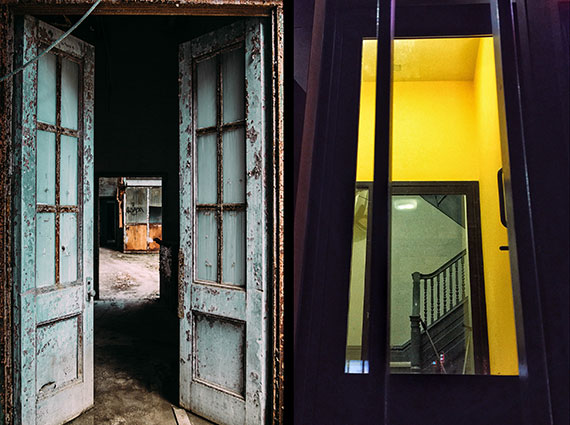
Left photo by Ryan Gerrard; right by Kent DuFault

A doorway is often thought of as a pathway to something new or different. Including unusual elements in the background of your door photography is guaranteed to get more views and likes because it includes a story element.

Door Comparisons

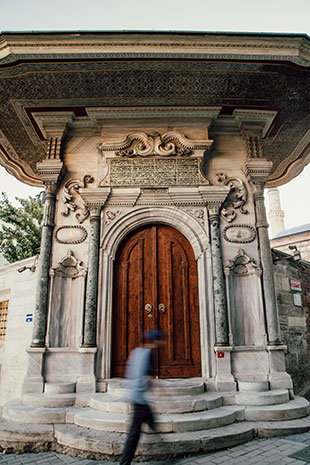
When searching for doors to photograph, keep an eye out for doors that are close to each other.

comparing doors in photography

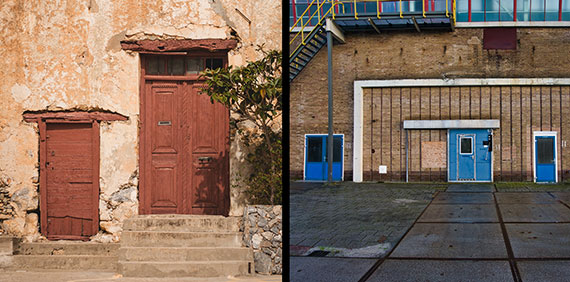
Left photo by Juli Kosolapova; right by Leo Wieling

You can often find interesting photographic juxtapositions using this technique.

Look for…

  • Dissimilar sizes or oddly similar sizes
  • Repetitive or non-repetitive shapes
  • Repeating colors or color contrast
  • Patterns

Try This Out:

Grab your camera and go out for a photo walk on a weekend afternoon and evening. Concentrate on finding doors with interesting backgrounds and using door comparisons. Try to tell a story with the doors you find and these techniques.

Door Details

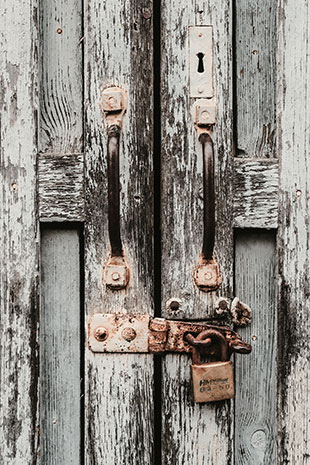
Focusing on the details of a door is a fun way to explore this subject.

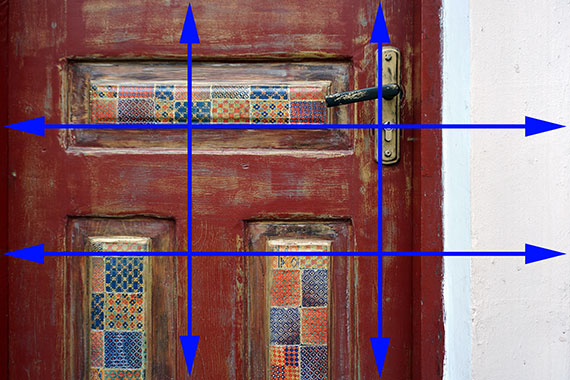
The image above exemplifies a significant problem with door detail photos: a poorly composed image.

In a photograph of door details, composition is crucial!

Let demonstrate this to you.

It was the details in this door that attracted the photographer to create an image. However, the composition falls flat for several reasons.

photographing door as rule of thirds

The photographer composed this shot in a horizontal format that places the door handle on the rule of thirds cross point.

This positioning would indicate that they wanted the door handle to be the final resting spot for a viewer’s eyes.

However, in this composition, the door handle becomes lost; it almost disappears. Plus, the negative white space to the right carries substantial visual weight and draws the eyes away from the door.

Critical Thought: When photographing door details, think about where you want the viewer’s eyes to land when exploring your photo.

door composition vertical

Vertical crop

This vertical crop tells the same story as the original but eliminates the distractions. The eyes solidly rest upon the door handle in this composition.

door composition horizontal

Horizontal option

As the photographer, if you were determined to create a horizontal-format photo, how about this as an option? Again, the elements are all there, but the composition is simplified.

Key Thought: Before clicking the shutter-release button, study the door, and pick out how you can emphasize the critical elements. In this example photo, the photographer used the high-key technique to pull the eyes right toward the keyholes.

What Can You Use for Emphasis in Door Detail Pictures?

  • Paint color
  • Cracked or chipped paint
  • Overall texture
  • Rust
  • Door design including unusual shapes
  • Tone variations
  • Light and shadow

Now it’s Your Turn

I want you to go out and photograph door details. Use the above composition suggestions to create a path through your photograph to a final resting spot. Be sure to present your work to others and see if your theories work out.

Open versus Closed Doors

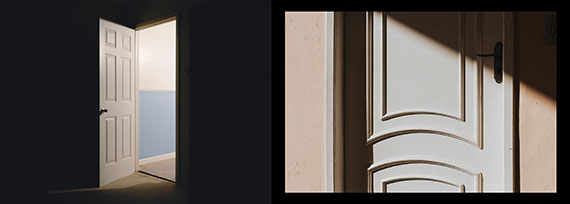
door photo angles

Right photo by Matthew T Rader; left by Jorge Flores

An open door sends a distinctly different message from a closed door. When possible, consider the alternatives. Perhaps open the door to see what’s behind it.

A Fun Project!

Photograph some doors that you can open and close. Photograph these doors in both scenarios. See if you can alter the mood of the image simply by changing the position of the door. Check the result with others to see if they catch your intent.

Doors with a Focal Point

Focal points are valuable for door photography. They can pull the eyes directly toward the door, even in a much broader and more elaborate environment.

add motion to door photos

Photo by Katie Moum

Pro Tip: Motion in, around or near your subject door will plant viewers’ eyes right onto it!

But beware of this pitfall!

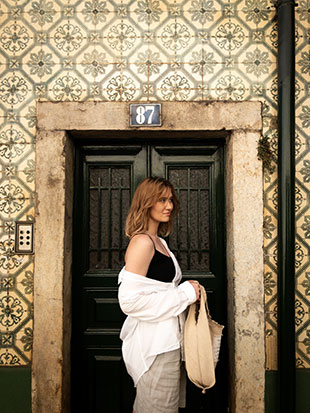
Portrait photography with doors

Photo by Nick Samoylov

It’s easy to place a focal point in a manner that draws too much attention away from the door. When this happens, the doorway loses its standing as the subject.

That is the case in the above photo. The woman has overwhelmed the doorway as the subject.

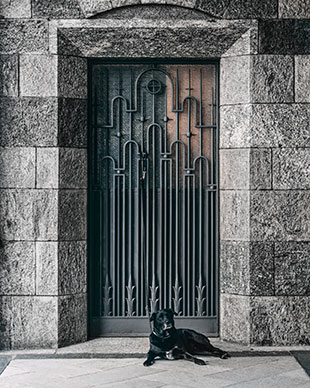
Door portrait photography

Photo by Szymon Fischer

This photograph is an exquisite example of a focal point that attracts immediate attention to the doorway but doesn’t overpower the door as the subject.

Go ahead, give it a try

Take some door photographs with a focal point included. Try different things. Try using motion, people, animals, flower pots or whatever else comes to mind. Practice emphasizing the focal point while making sure that the door remains the subject.

Does your composition support your doorway as the subject?

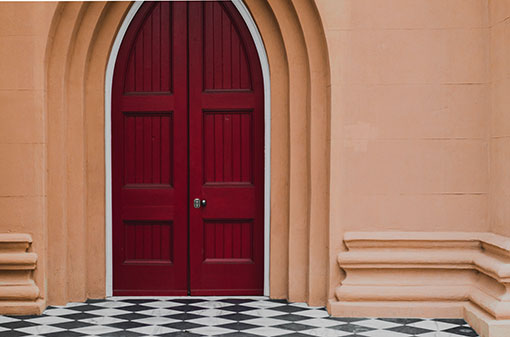
arch doorway photography

Photo by Taylor Wilcox

Are you making sure that the doorway is the subject of your photograph? This photo element is likely one of the most challenging aspects of door photography—if you’re doing anything other than merely framing up a doorway.

The composition can become convoluted reasonably quickly.

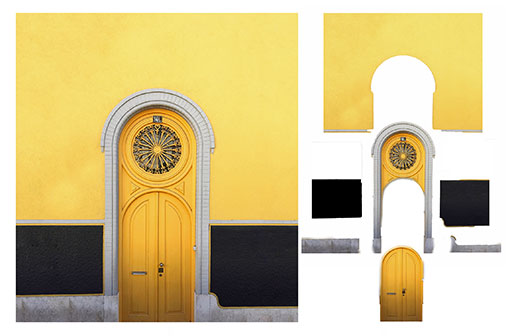
Crucial Point: The ability to dissect your door image within your mind, and analyze the composition quickly, is an excellent skill. Think about your picture as a puzzle. Before you click the shutter release, dissect the puzzle pieces.

Let me show you what I mean.

photo composition breakdown

Photo by Karla Caloca; dissection by Kent DuFault

Pro Tip: Before taking your door picture, dissect the elements that you’ve included in the frame and think of them like puzzle pieces, as I’ve done above. This technique can be accomplished in your head, but if you’re new to the idea and find it hard, you can also sketch it out on a piece of paper or on your computer.

Does the door have enough visual weight to stand out against the other pieces of your puzzle?

In the above scenario, I would say it does not.

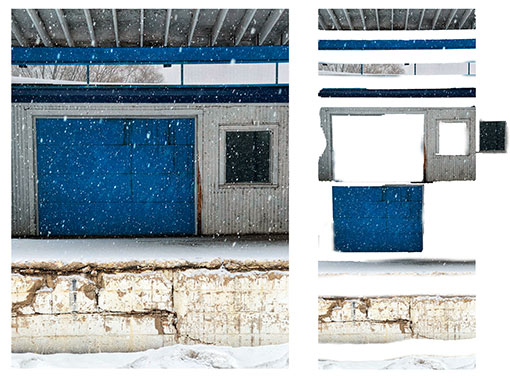
I’ve completed the same procedure for this wintery garage door scene below. This image is a busier composition than the first example. Yet the door is better positioned to be classified as the subject through color contrast and the frame’s division.

door photo composition breakdown

Photo and dissection by Kent DeFault

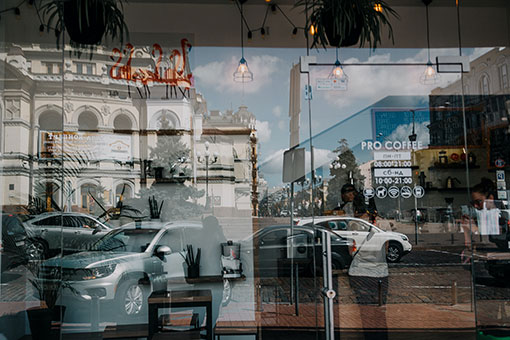
Dealing with Glass

glass doorway photo

Photo by Marjan Blan

Nothing will muff up your door photo faster than an ill-placed reflection in the glass of a doorway. In the above example photo, you can barely tell where the door is located!

old house photo tip

Photo by Luke van Zyl

Tips for dealing with glass:

  • Choose your camera angle carefully to control what reflects in the glass
  • Use a reflection to help tell a story with the door
  • Come back to the door at a different time of day when the lighting prevents reflections
  • Try using a polarizing filter. This scenario is the exact situation when polarizing filters help

In Conclusion

door frame photography

Photo by Henry & Co.

Photographing doors is rewarding and a great way to add some creativity to your portfolio.

Keep these points in mind:

  • Try to include a storytelling element when possible
  • Check beyond the door. Is there an unusual and exciting element that could be included?
  • You don’t always have to show the entire door or too much of the surrounding area
  • Door comparisons are very compelling photos, if you can spot them
  • Door details make beautiful pictures. But, make sure you analyze the scene for the best composition
  • Consider the emotional aspect of a door being open versus closed
  • Focal points are a powerful tool for door photography—just make sure that the focal point doesn’t overwhelm the doorway as the subject
  • Dissecting a door scene into puzzle pieces is a great way to analyze your picture before taking it
  • Pay careful attention to the glass. Make the reflections work for you and not against you. You can always return at another time or try out that polarizing filter you carry around in your kit bag

About the Author:
Kent DuFault is an author and photographer with over 35 years of experience. He’s currently the director of content at the online photography school, Photzy.com

For Further Training, Deal Ending Soon:

With readers looking for more photography practice near home, we were able to get another huge markdown on the popular Photo Action Cards – which includes a card specifically on dynamic lines. Expand your photography skills with 65 printable project sheets that will give you over 200 photography assignments, covering everything you can imagine. They are currently 88% off if you want to try them out.

photo action cards

New: The Photography Action Cards (Click to See How They Work)

These Action Cards discuss a photographic topic, provide you with suggested considerations, and give you specific photographic assignments. They’ll kick you out of the “nest” to go have a personal discovery experience all on your own.

Deal ending soon: The Photography Action Cards at 88% Off


from PictureCorrect https://ift.tt/tGRkDnB
via IFTTT